What the 2002 ice storm taught about outages
The North Carolina Utilities Commission's review of the December 2002 ice storm found that the great majority of outages came from trees and limbs falling on distribution lines, and restoration across the region took days. Ice storms are less frequent than summer thunderstorms, but they cause the longest outages — the kind that decide whether freezer contents are saved.
A multi-day outage plan for refrigerators and freezers
| Time without power | Refrigerator | Freezer |
|---|---|---|
| First 4 hours | Keep closed — food stays safe about 4 hours | Keep closed |
| 4 hours to 2 days | Move perishables to coolers with ice | Full freezer holds about 48 hours (24 if half full) |
| Power back | Check a thermometer: discard perishables held above 40 °F for over 2 hours | Food with ice crystals or at 40 °F or below can be refrozen |
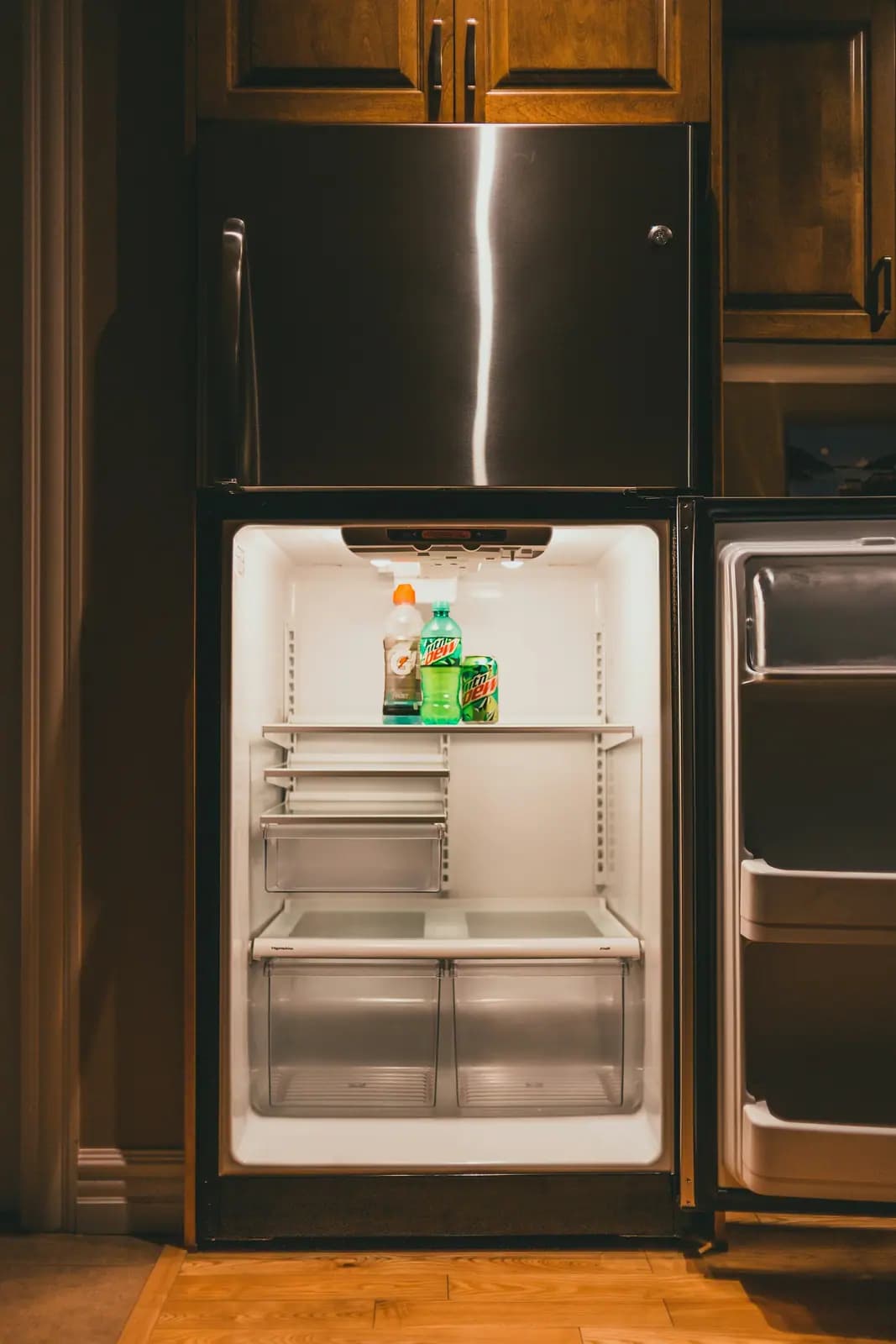
When the appliance doesn't come back
If a refrigerator clicks every few minutes without starting after power returns, or a freezer runs but won't get cold within a day, the restart may have exposed a weak start relay, compressor or control board. Leave the doors closed, note what you hear, and request a diagnosis. Running a portable generator? Keep it outdoors, far from windows — never in a garage — because of carbon monoxide.
Soft water: less scale, more suds
Charlotte Water draws from lakes on the Catawba River, and the utility describes its water as soft. Soft water dissolves detergent easily, so the doses printed on many detergent containers are more than an HE washer or dishwasher needs here. Too much detergent causes oversudsing, slow draining, error codes and residue — problems that look like a pump fault but aren't.
- Use the minimum dose line, especially in HE front-loaders.
- If the washer shows a 'suds' code or drains slowly, run a rinse cycle with no detergent before calling for service.
- Film on glasses in soft water is more often detergent etching or overdosing than mineral scale.
Provider coverage in Charlotte
We're verifying participating providers in Mecklenburg County and surrounding areas. Call with your ZIP code first — we'll tell you plainly if no provider serves it.
Charlotte at a glance
- Main appliance stress
- Ice-storm and winter outages; restart failures
- Tap water
- Soft — Catawba River lakes (Charlotte Water)
- Gas emergencies
- Leave the home; call 911 or Piedmont Natural Gas from outside
- Common soft-water issue
- Oversudsing from too much detergent in HE washers
Provider coverage in Charlotte
Participating providers: not yet. This page is local guidance — not a promise that a technician is available at every address.Common questions
My refrigerator won't restart after an ice-storm outage. What should I check?
Check the breaker and the outlet with another device first. If it has power but only clicks, or runs without cooling after several hours, request a diagnosis — start relays and controls sometimes fail on restart.
Do I need a water softener for my dishwasher in Charlotte?
Generally no — Charlotte Water describes its water as soft. Use less detergent and rinse aid instead; softeners address hard water, which isn't the usual problem here.
Why is my washer full of suds?
Soft water plus a full detergent dose is the usual cause. Run an empty rinse, then use the minimum dose line from now on.
More in North Carolina: North Carolina appliance repair help