Short answer
Clean the filter first, then check the drain path under the sink: a clogged disposal inlet, a new disposal with its knockout plug still in place, a blocked air gap, or a kinked hose. If water still stands after a drain cycle, the drain pump or check valve may need service.
Safe checks
- Turn the dishwasher off and remove the bottom rack.
- Scoop out standing water with a cup and towel.
- Remove and clean the filter per the manual.
- Run the garbage disposal to clear its inlet.
- If you have a countertop air gap, remove its cap and clear debris.
- Look for a kinked drain hose under the sink.
Dishwasher drain and filter
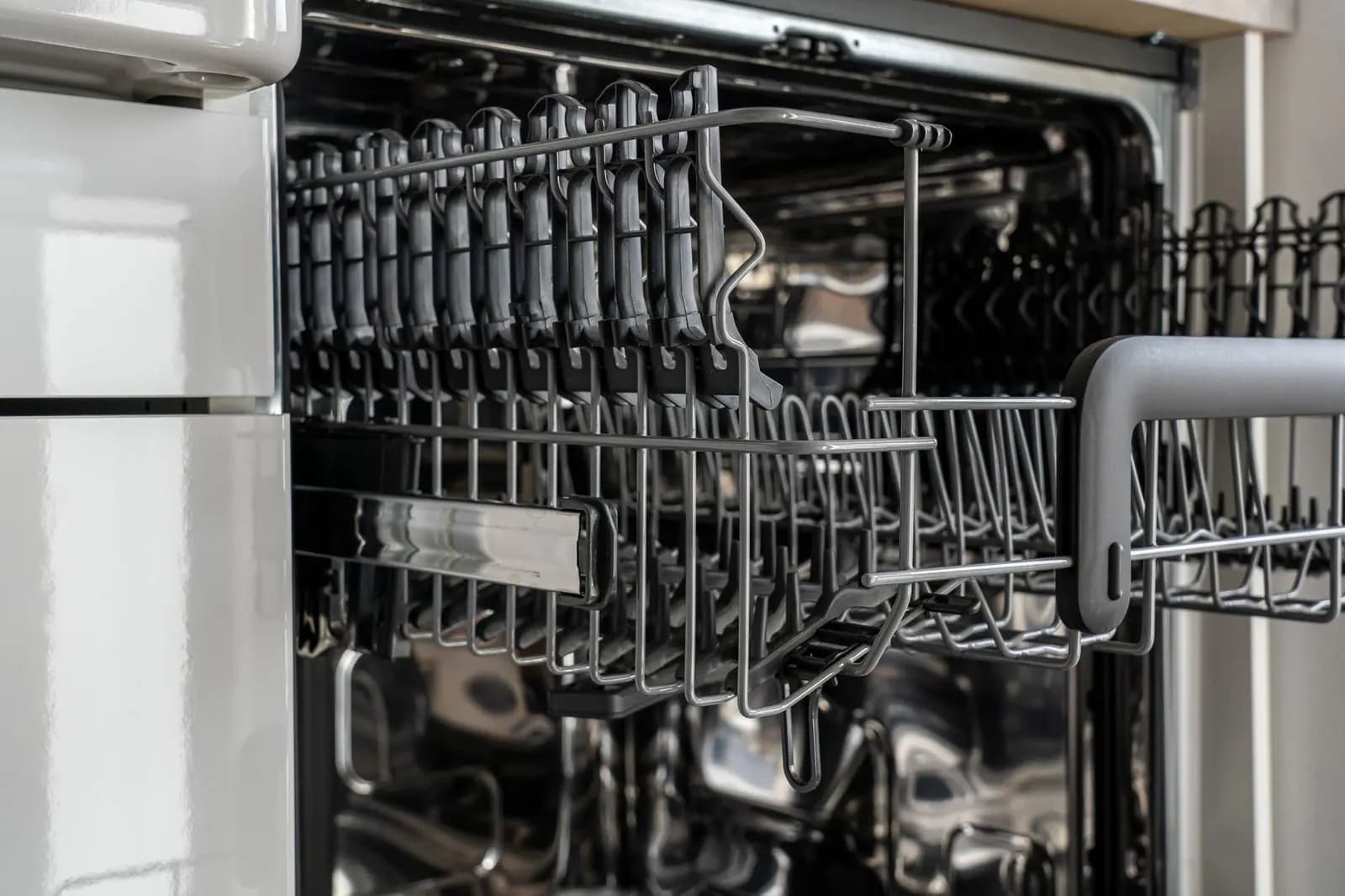
Example photos of the condition — different appliances, not RepairHearth jobs. Photos: Richard Stachmann (Unsplash) · Castorly Stock (Pexels).
Possible causes, in the order they're usually ruled out
- Filter & sumpFood debrisYou can check
- Disposal inletClogged, or knockout plug never removedYou can check
- Air gap / hoseBlocked air gap or kinked hoseYou can check
- Drain pumpBlocked or failedTechnician
- Check valve & controlsValve stuck or control faultTechnician
Possible causes
| Clue | Possible cause |
|---|---|
| New disposal just installed | Knockout plug not removed |
| Gurgling, slow drain | Clogged air gap or hose |
| Hum but no draining | Drain pump blocked or failing |
| Silent at drain step | Pump, wiring, or control |
Dishwasher water path
- 1Inlet valveFills the tubTechnician
- 2Circulation pumpDrives the spray armsTechnician
- 3Spray armsClear blocked holesYou can check
- 4FilterClean monthlyYou can check
- 5Drain pump + hoseTo disposal or sink drain
Repair or replace?
A clog or drain pump isn't usually a reason to replace a dishwasher. If the drain problem comes with a cracked tub, rusted racks, or a failing control on an older unit, replacement may make more sense.
Turn it off if
Safety
- Water is leaking onto the floor
- You smell burning from the motor area
- The breaker trips during the drain step
How it's diagnosed
A technician checks the sump and filter, then the drain path from the pump to the sink: hose, air gap, and disposal inlet. If the path is clear, they test the drain pump and its check valve. Many dishwashers have a service mode that runs the drain pump alone, which makes the fault easy to isolate.
Cost outlook
Clearing a blockage is the least expensive outcome. Drain pumps are a common moderate repair. A control fault costs more and depends on parts availability.
What to request
A symptom points to likely causes; only testing confirms one. If the checks above don't solve it, request a diagnosis for dishwasher repair and mention what you've already checked.
Common questions
Is some water in the bottom of the dishwasher normal?
A small amount around the filter area is normal for many models. A pool covering the tub floor is not.
Need dishwasher repair? Call now
Pricing, timing, and appointments are confirmed by the repair provider.
Our phone line is being set up. Please check back soon.