Washer repair at a glance
- Most common faults
- Drain blockages, imbalance, door/lid locks, leaks
- First safe check
- Pump filter (front-load), drain hose, load balance, leveling
- Technician-only
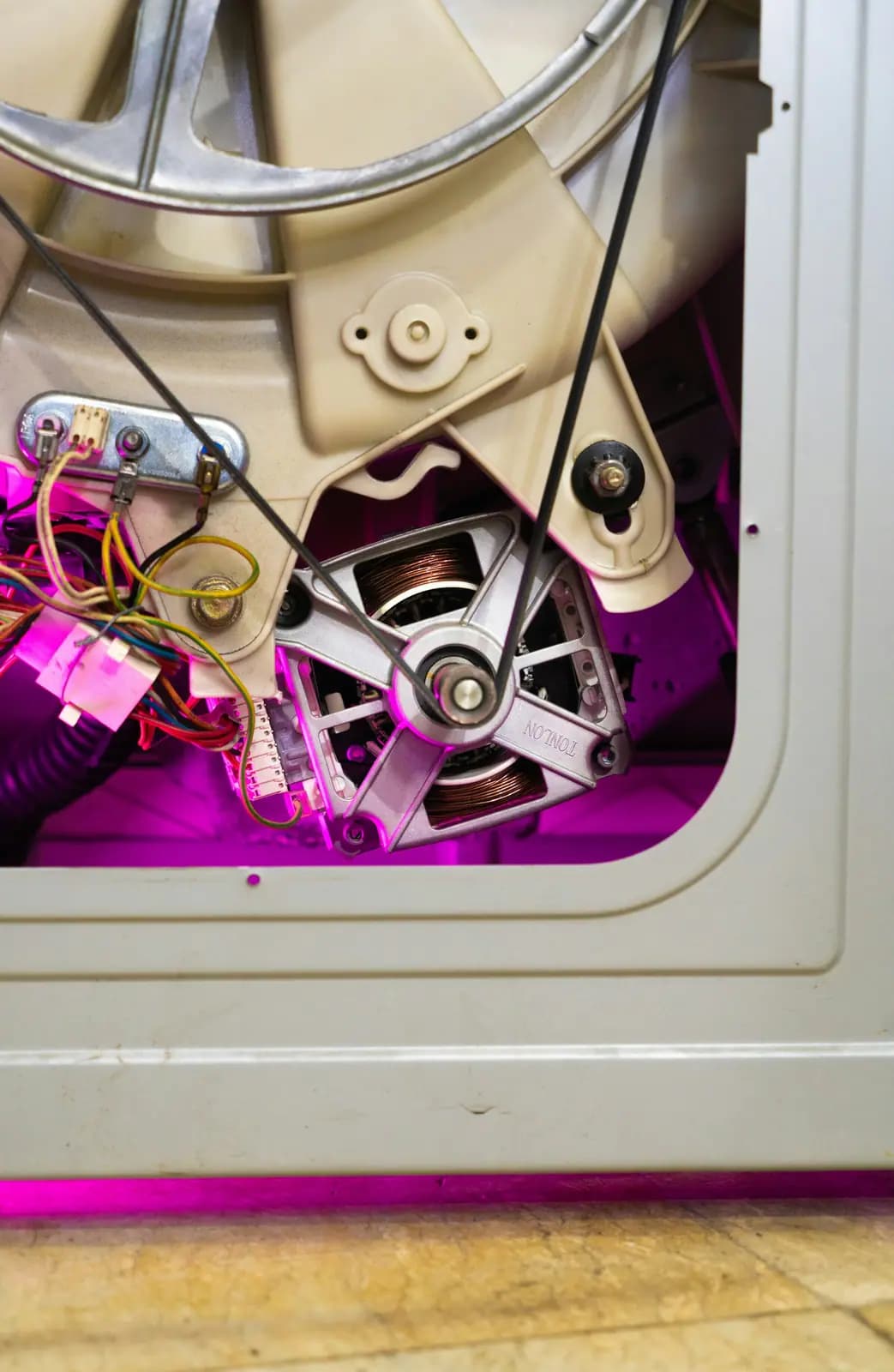
- Pumps, motors, belts, bearings, controls
- Repair-or-replace pivot
- Drum bearings on many front-loaders
Front-load vs top-load: why it matters
| Front-load | Top-load | |
|---|---|---|
| Most common drain clog | Pump/coin filter behind a front access panel | Drain pump or hose; some have no user-cleanable filter |
| Typical leak sources | Door boot (gasket), detergent overdosing, filter cap | Supply hoses, tub seal, overfilling |
| Odor | Common if the door is kept shut and the gasket isn't wiped | Less common |
| Won't spin | Door lock not engaging, imbalance, drainage | Lid switch/lock, belt or motor coupling, imbalance |
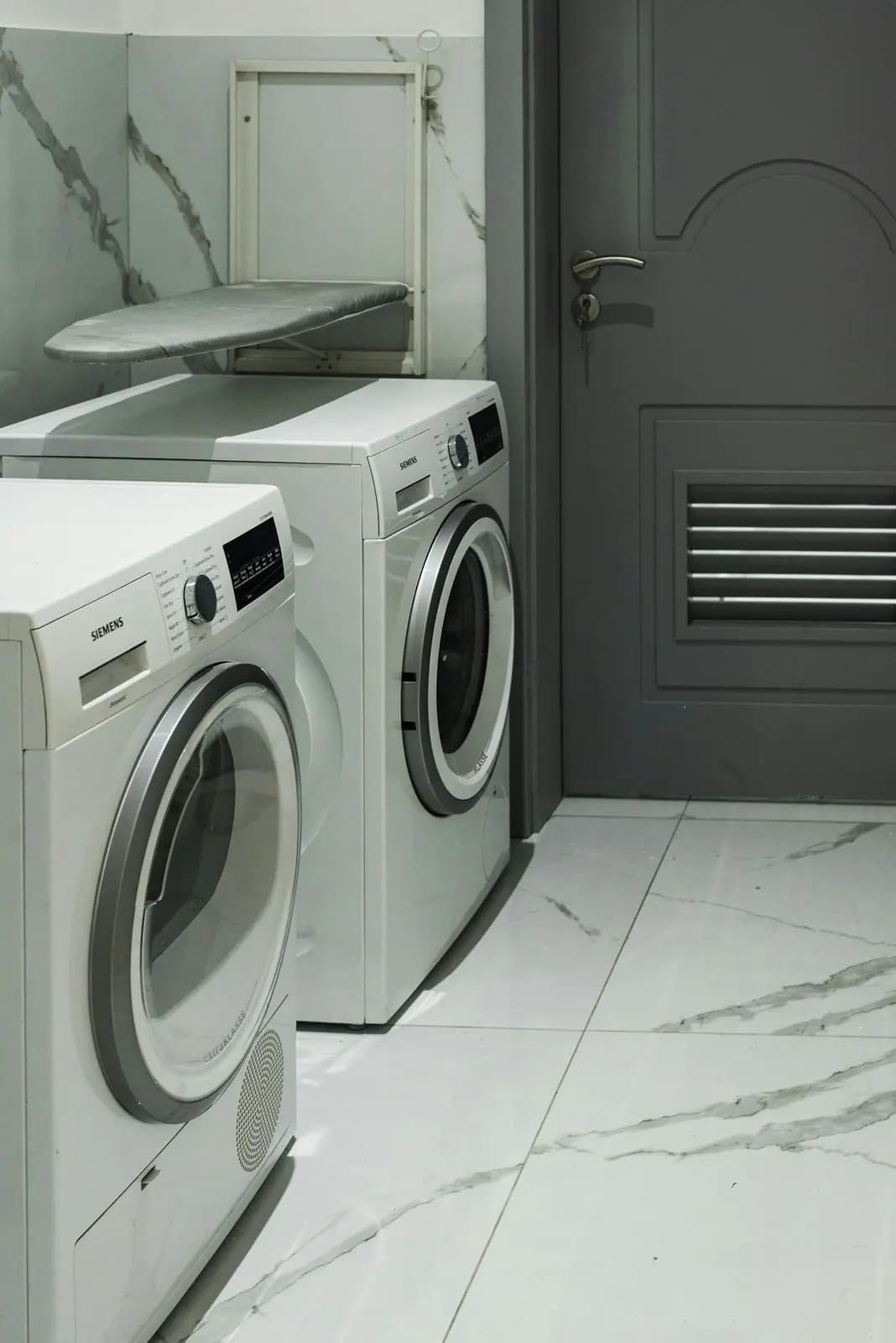
| Stacked with a dryer | Often — adds access time | Rare |
Why most washers stop spinning
A washer won't spin if it can't drain first, because spinning a drum full of water would overload the motor. It also won't spin, or will cut the spin short, when it detects an unbalanced load. So 'won't spin' is often really 'won't drain' or 'can't balance' — check those first.
Washer drain path
- 1DrumWater collects at the bottom of the tub
- 2Pump filterCatches coins, lint, small itemsYou can check
- 3Drain pumpPushes water outTechnician
- 4Drain hoseCheck for kinksYou can check
- 5StandpipeHouse drain must flow freely
What has to happen before a washer spins
- 1Lid or door lockMust confirm closedYou can check
- 2Water drainedClear the pump filter firstYou can check
- 3Balance checkOne heavy item can stop spinYou can check
- 4Control + motorCommands and drives the spinTechnician
- 5Belt / coupler / clutchTransfers motion to the drumTechnician
Safe checks
- Rebalance the load and run a drain-and-spin cycle. Single heavy items like bath mats commonly trigger imbalance protection.
- Look for a kinked drain hose and make sure it isn't pushed too far into the standpipe.
- Front-loaders: with the machine unplugged, clean the pump filter as your manual describes. Expect water — have towels and a shallow pan ready.
- Make sure both water supply valves are fully open and the inlet hoses aren't kinked.
- Check that the machine is level and, on a recent install, that the shipping bolts were removed.
Turn it off and call if
Safety
- Water is near an outlet or cord — switch off the circuit at the breaker before touching anything.
- You smell burning or the motor area is hot.
- The door won't unlock with water inside. Don't force it; a front-loader full of water will flood the floor.
What a technician usually checks
- Drain pump operation and blockages beyond the filter
- Lid switch or door lock and its signal to the control
- Drive belt, motor coupling (top-load), or motor and control (front-load)
- Water inlet valve, pressure/level sensing, and hoses
- Suspension springs, shock absorbers, and drum bearings when the machine shakes or roars
Odor and mildew in front-loaders
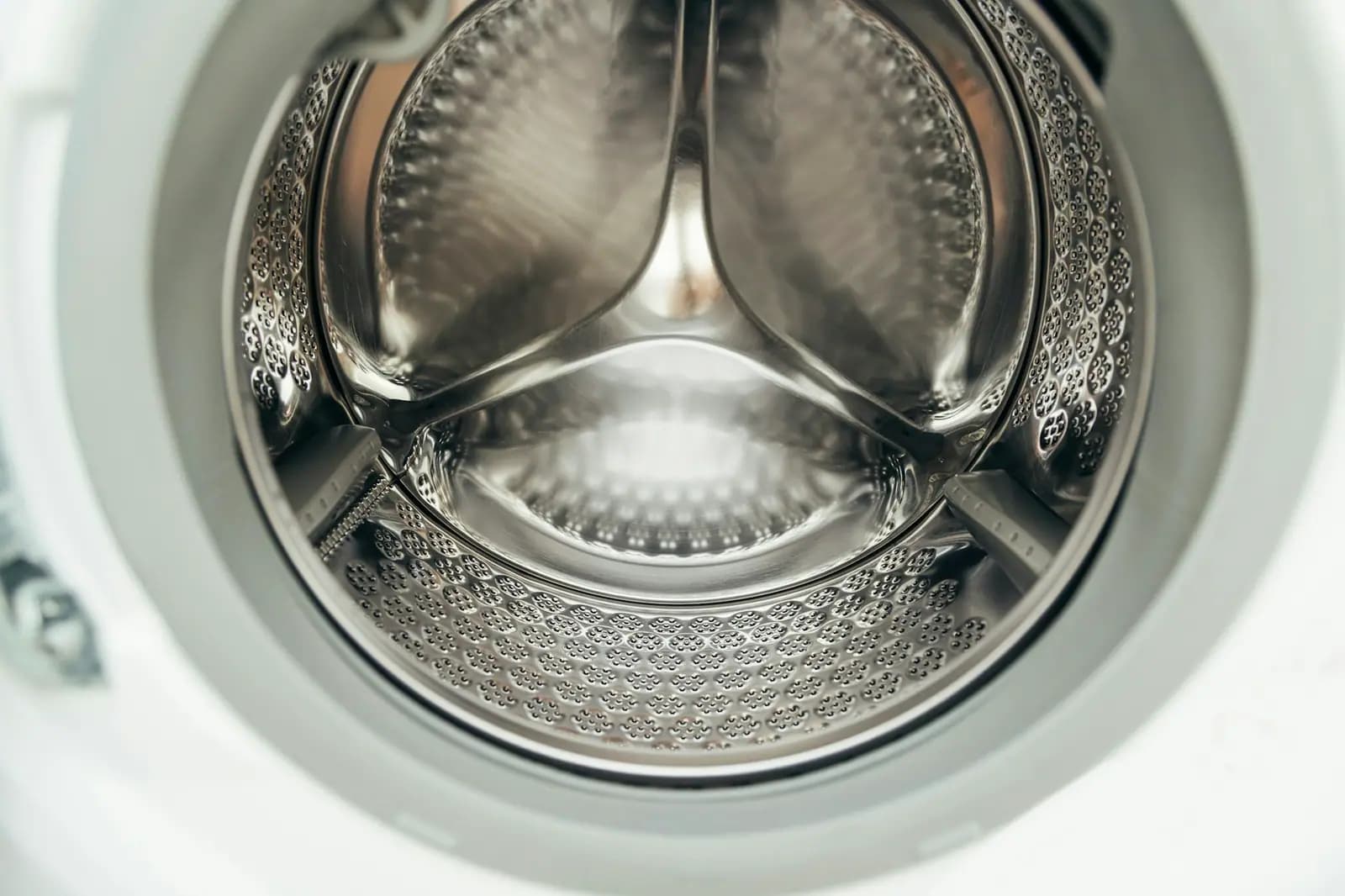
Front-loaders seal tightly, so moisture stays inside. Wipe the door gasket after use, leave the door ajar between loads, use HE detergent in the recommended amount, and run the cleaning cycle your manual describes. Persistent odor with standing water can point to a drainage problem.
What affects washer repair cost
| Factor | Why it matters |
|---|---|
| Front-load vs top-load | Front-loaders often take longer to open up, especially for pumps, door boots, and bearings. |
| The part | Lid switches, door locks, belts, and inlet valves are smaller jobs; drum bearings and tub seals are the largest. |
| Stacked installation | A washer-dryer stack may need to be separated to reach the washer. |
| Water damage | Repairing the washer doesn't include flooring or drywall; check those separately after a leak. |
| Parts availability | Control boards for some models are scarce, which affects both price and timing. |
| Diagnostic fee | Ask whether it's credited toward the repair. |
Is my washer too old to repair?
Washer lifespan depends heavily on use: a household running several loads a day wears bearings, suspension, and pumps much faster than one running a few loads a week. Overloading, overdosing detergent, and an unlevel machine all add wear.
A pump, latch, or belt on an older washer can still be a sensible repair. Failed bearings on an older front-loader — often signaled by a loud roar during spin — are the point to compare against replacement.
Repair or replace?
Pumps, lid switches, door locks, inlet valves, and belts are commonly repaired. Failed drum bearings — signaled by a loud roar during spin — are a bigger job on many front-loaders because the tub may need to be disassembled. That's where comparing the quote against a new machine makes sense. If you're considering replacement, ENERGY STAR lists efficient models.
Have ready
- Brand and model (usually inside the door or lid, or on the back)
- Front-load or top-load, and whether it's stacked
- Any error code and what step the cycle stops on
- Whether water is left in the drum right now
How a repair request works
- 1Call usTell us the appliance, the brand and what it's doing.
- 2Describe the problemBrand, model, symptoms, and what you've already checked.
- 3Provider reviews itThey contact you to accept and to ask anything they need.
- 4Diagnosis and quoteThe provider confirms any diagnostic fee and the repair price before work starts.
Common questions
Why is there water left in my washer?
Most often a clogged pump filter, a kinked drain hose, or a blockage in the household drain. If those are clear and the pump hums or stays silent, the pump or control may need diagnosis.
Is 'washing machine repair' the same as 'washer repair'?
Yes — same appliance, same service.
Why does my washer shake so much?
Usually an unbalanced load or an unlevel machine. On new installs, check the shipping bolts were removed. Persistent shaking with balanced loads suggests worn suspension parts.
Local guides
Where local climate, storms, water, or altitude change the advice: