Short answer
A freezer that can't hold 0 °F is most often losing cold air through the door seal, has blocked airflow, has a defrost fault (frost over the back panel), or can't release heat because the condenser is dirty or the room is too hot. A warm, silent freezer may have a compressor-circuit or control fault.
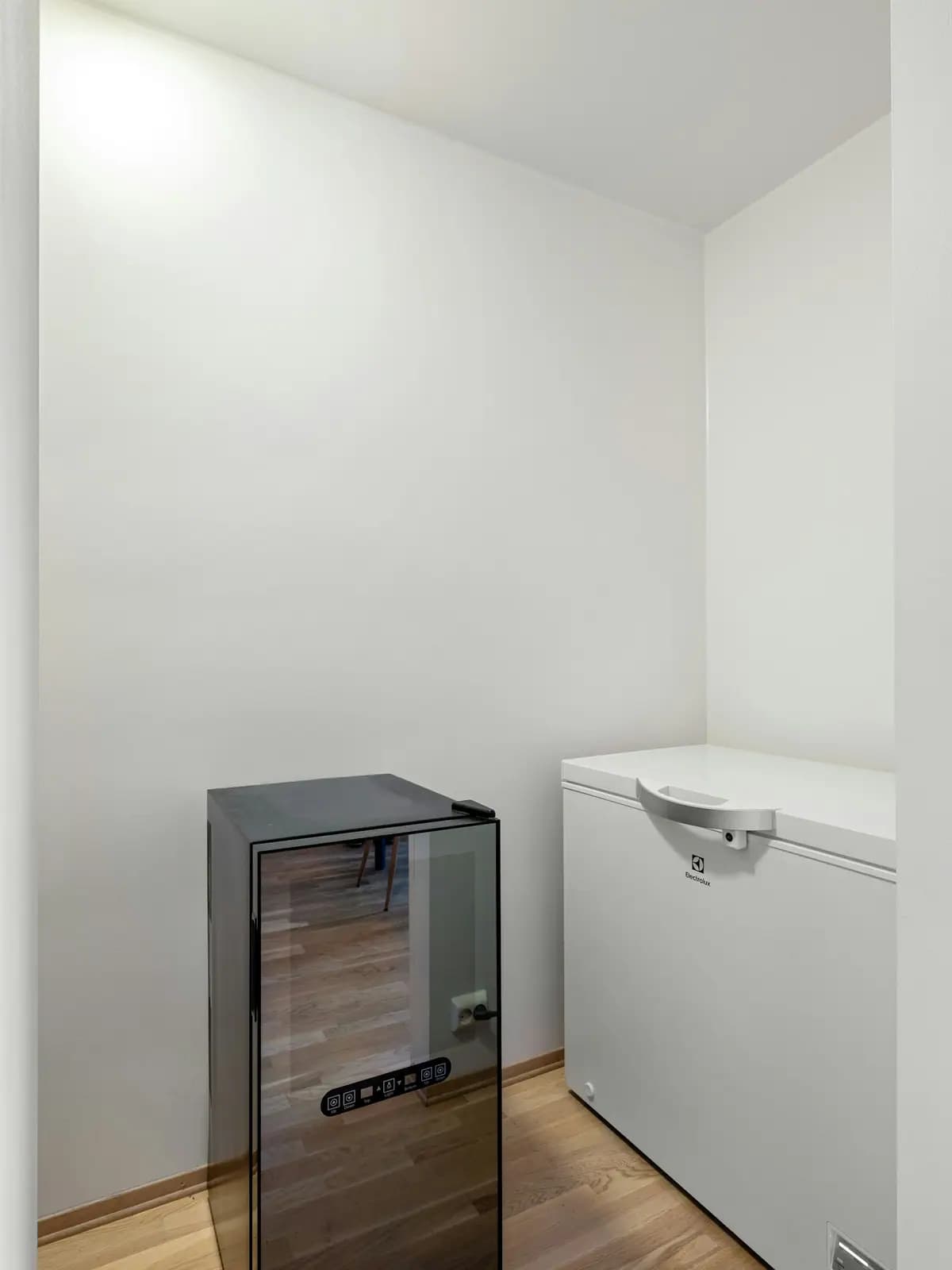
Your food
Safety
- Keep it closed. A full freezer stays cold longer than a half-full one.
- Food with ice crystals, or at 40 °F or below, can generally be refrozen — check FoodSafety.gov's chart for specific foods.
Possible causes, in the order they're usually ruled out
- Door or lid sealWarm air getting inYou can check
- LocationRoom outside the rated ambient rangeYou can check
- CondenserDust or blocked airflowCheck, then technician
- Defrost systemFrost over the back panelTechnician
- Sealed systemCompressor or refrigerantTechnician
Possible causes
| Clue | Possible cause |
|---|---|
| Frost near the door or lid | Seal not closing, door left ajar |
| Frost over the back panel (frost-free models) | Defrost heater, thermostat, or control |
| Warm, runs constantly | Dirty condenser, fan, hot location, or refrigerant leak |
| Warm, silent | Power, compressor start circuit, or control |
| Freezer in a garage | Room temperature outside the model's rated range |
Freezer frost buildup
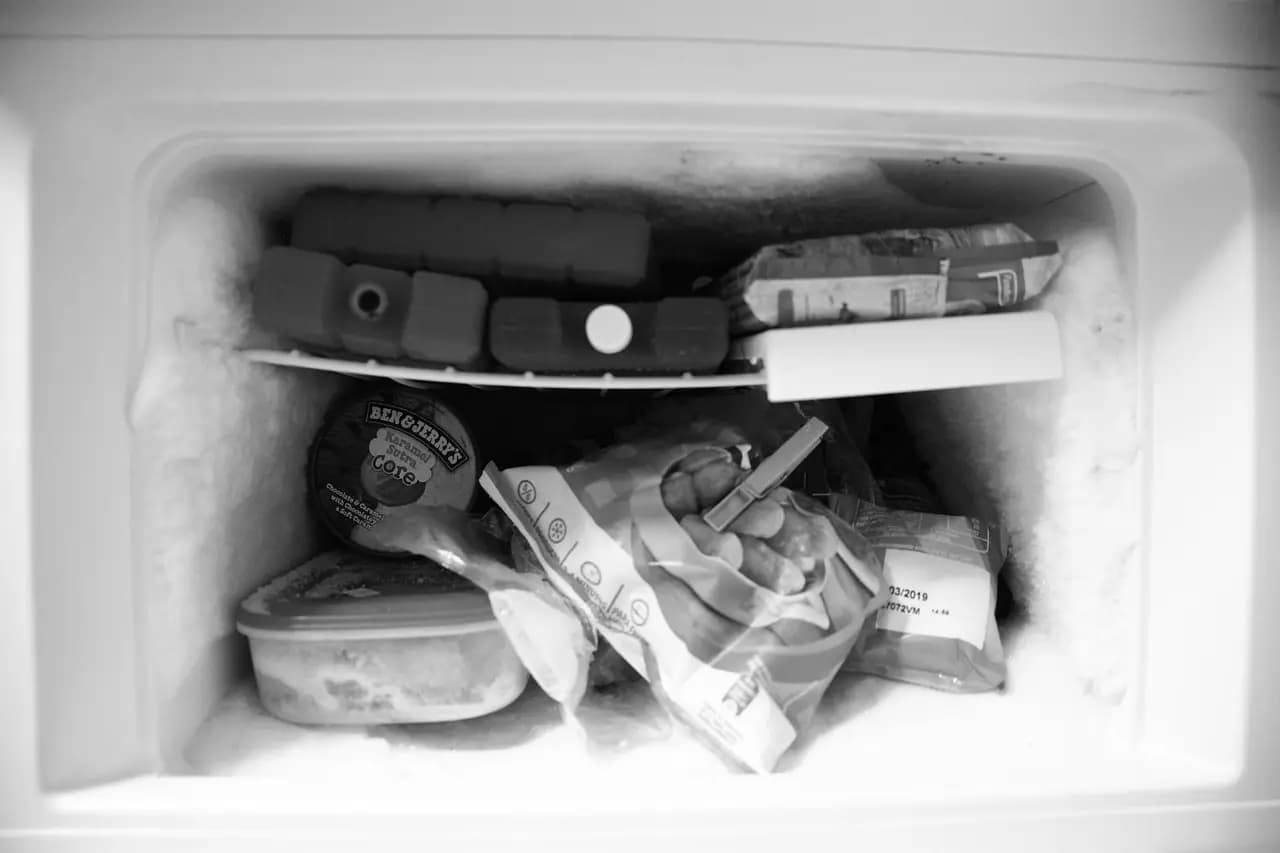
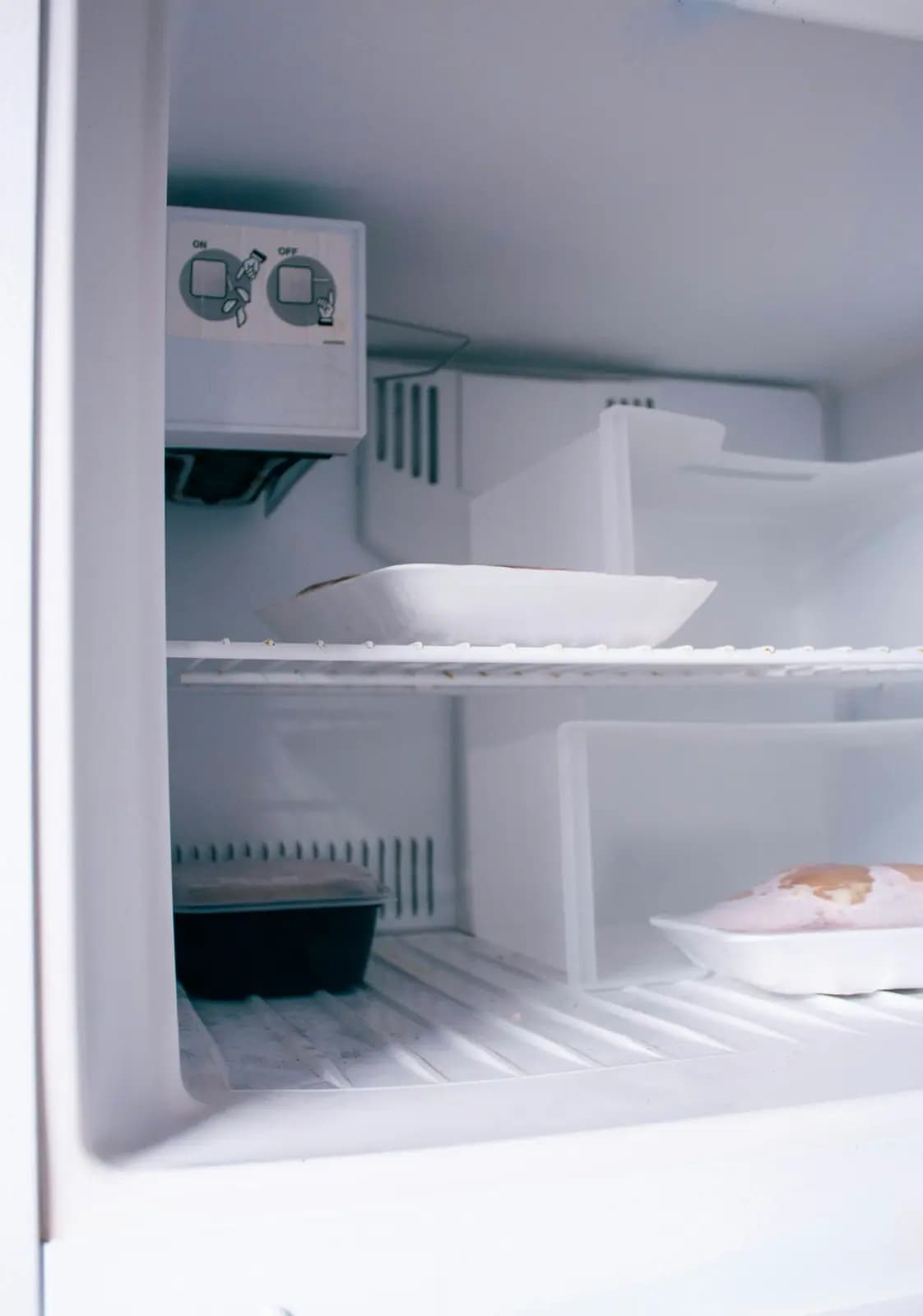
Example photos of the condition — different appliances, not RepairHearth jobs. Photos: juliopablo (Pixabay) · S. Laiba Ali (Unsplash).
Safe checks
- Thermometer reading in the middle of the freezer
- Gasket paper test at several points
- Vents clear inside uprights
- Clearance around the cabinet
- For garage freezers, check the manual's ambient temperature range
Before: A twisted or torn gasket leaves a gap: a sheet of paper slides out freely and warm, humid air leaks in, causing frost and sweating.
After: Gasket seated evenly around the door; the paper test shows resistance at every point.
Original illustration of a common condition — not a photo of a specific repair.
Don't attempt
Leave this to a professional
- Refrigerant or compressor work
- Chipping ice off coils
- Removing interior panels
How a technician narrows it down
The first questions are whether the compressor runs, whether the condenser fan turns, and where frost has formed on the evaporator. A partial frost pattern — frosted near the inlet, bare elsewhere — can indicate low refrigerant, while a solid block of ice points to a defrost failure. Sealed-system testing requires an EPA-certified technician.
Repair or replace?
Seals, fans, and defrost parts are generally worth repairing. A sealed-system failure on an inexpensive chest freezer often costs more than a new one, so get the full quote before approving the work.
What to request
A symptom points to likely causes; only testing confirms one. If the checks above don't solve it, request a diagnosis for freezer repair and mention what you've already checked.
Common questions
Is it normal for my chest freezer to build frost?
Yes, most chest freezers are manual-defrost, so frost builds slowly and must be defrosted periodically. Rapid frost buildup suggests a lid seal problem.
Need freezer repair? Call now
Pricing, timing, and appointments are confirmed by the repair provider.
Our phone line is being set up. Please check back soon.