Short answer
After a power outage, check food safety first, then restart appliances one at a time and watch for problems. After a flood, don't use any appliance that was underwater — even if it seems to work — until a qualified technician has inspected it. Floodwater can damage wiring, controls, motors, and gas components in ways you can't see.
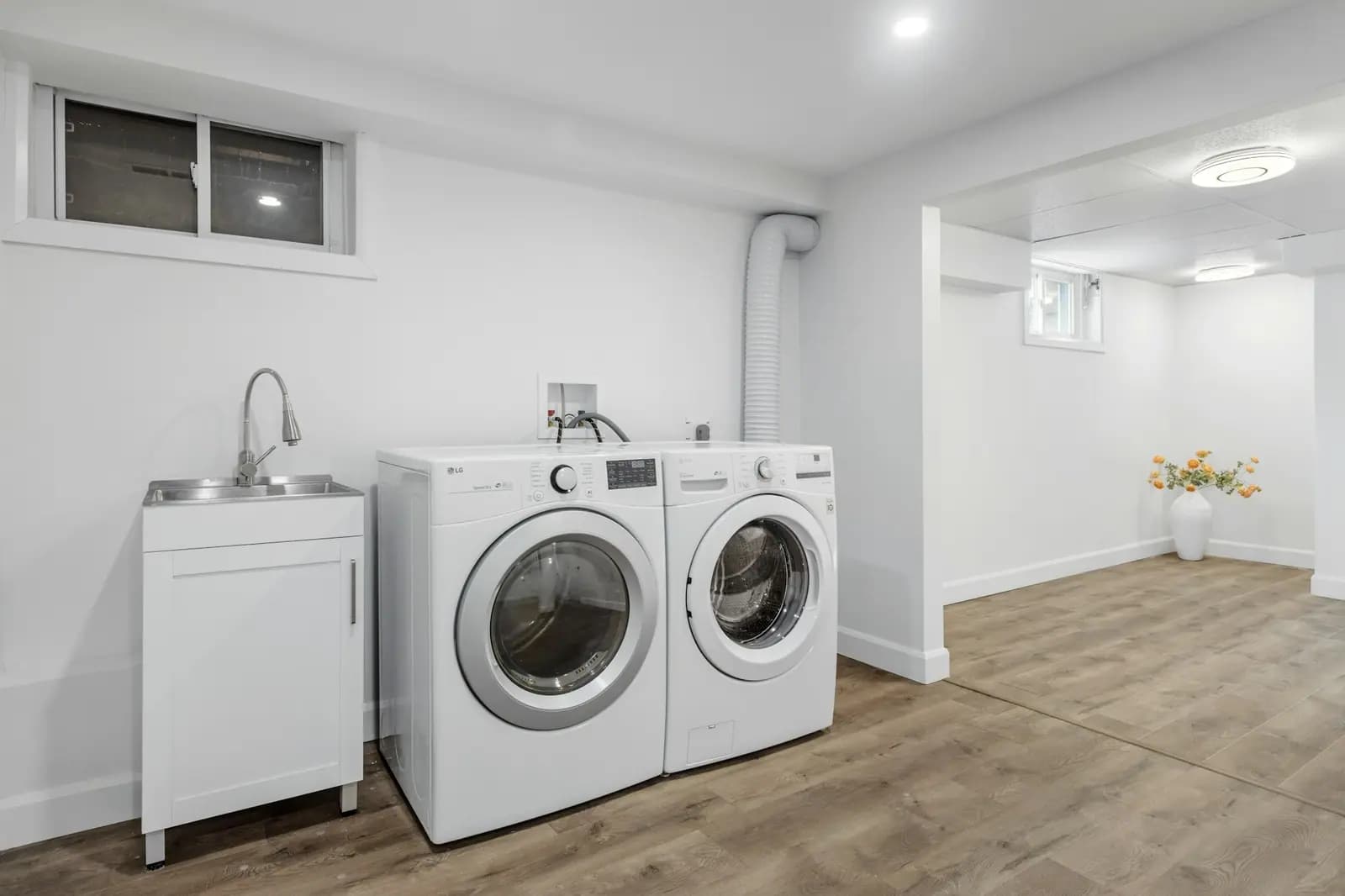
Flooded appliances: don't switch them on
Act now
- Don't plug in or switch on an appliance that was in floodwater.
- Don't enter a flooded room where outlets or cords are underwater; have the power shut off first.
- If gas appliances were flooded or you smell gas, leave and call your gas utility or 911 from outside.
- Have a qualified technician inspect flooded appliances before use.
Which appliances to check, and what for
| Appliance | After an outage | After a flood |
|---|---|---|
| Refrigerator / freezer | Recovers to 40 °F / 0 °F within a day; compressor and condenser fan running | Don't plug in; compressor area and controls at the base need inspection |
| Washer / dishwasher | Cycle restarts; door unlocks once drained | Pump, motor, and controls sit near the floor — inspect first |
| Dryer | Electric: both breaker halves on; gas: igniter lights | Don't run or relight until inspected |
| Range / oven | Clock set; burners spark; oven heats | Gas components need inspection before relighting |
Food after a power outage
A closed refrigerator generally keeps food safe for about four hours; a full freezer for about 48 hours (24 if half full), per FoodSafety.gov. Check temperatures with a thermometer and follow the food-by-food chart when in doubt.
Restarting after an outage
- Wait for power to be stable before restarting large appliances.
- Restart them one at a time.
- Give refrigerators and freezers several hours to recover, then confirm 40 °F and 0 °F with a thermometer.
- Check that ice makers and dispensers fill normally and nothing leaks.
- Note any appliance that won't start, trips a breaker, or shows an error code.
Generator safety
Safety
- Run portable generators outdoors only, far from doors, windows, and vents — carbon monoxide can kill.
- Plug appliances into the generator with properly rated cords; never back-feed your home's wiring.
- Check the generator's rating before connecting a refrigerator or freezer; motors draw extra power when starting.
Problems to watch for afterward
- Refrigerator or freezer won't return to temperature
- Control panels unresponsive or showing errors
- Breakers tripping when an appliance starts
- Burning smell
Common questions
My washer was in floodwater but runs. Is it OK?
Don't rely on it running. Floodwater can leave contamination and corrosion in motors, pumps, and controls. Have it inspected before regular use.
Call for appliance repair
Pricing, timing, and appointments are confirmed by the repair provider.
Our phone line is being set up. Please check back soon.