Short answer
Repair usually makes sense when the failure is a routine part, the appliance is otherwise reliable, parts are available, and the quote is a modest share of a comparable new unit installed. Replacement gets stronger when the failure is major, it's the latest in a string of repairs, parts are scarce, there's a safety concern, or a new model would meaningfully cut energy or water use. Age matters, but it isn't the deciding factor on its own.
Five questions that decide it
- How severe is the failure? A gasket or pump isn't the same as a compressor or tub.
- What's the full quote versus a comparable new unit, delivered, installed, and old unit removed?
- Is this the first repair, or the third in two years?
- Are the parts available now, and from the manufacturer?
- Is there a safety issue or an open recall?
Appliance-specific guides
Each appliance has its own failure patterns. Detailed guides: refrigerators, washers, dryers, dishwashers, and ovens and ranges.
Refrigerators
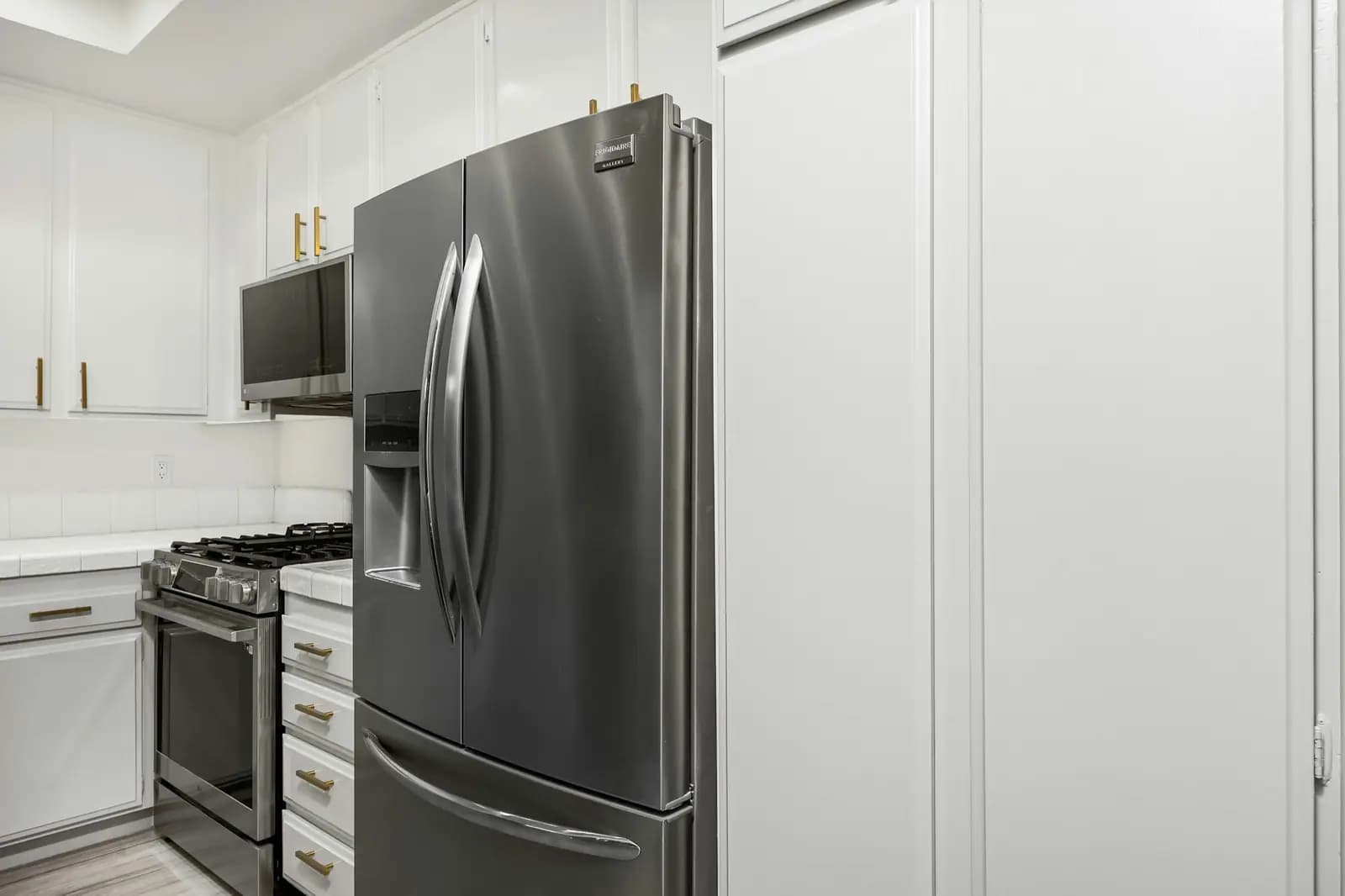
Fans, defrost components, door gaskets, and water valves are routine repairs worth doing on a sound refrigerator. Sealed-system repairs (compressor, refrigerant leaks) are the expensive category, and they're where replacement deserves a serious look — especially on an older unit whose cabinet, doors, or shelves are also worn. Newer models can use less energy; ENERGY STAR lists efficient ones.
Washers
Drain pumps, lid switches, door locks, inlet valves, and belts are routine. Drum bearings on many front-loaders are a big job because the tub may need to be split; a roaring spin on an older machine often tips toward replacement.
Dryers
Dryers are mechanically simple, and most repairs (belts, rollers, elements, igniters, thermostats, fuses) are worthwhile. Before replacing a dryer for slow drying, make sure the vent isn't the real problem — a new dryer on a clogged vent dries just as slowly.
Dishwashers
Pumps, latches, and inlet valves are common repairs. A cracked tub, rusted-through components, or several failing parts usually point to replacement — unless the unit is panel-ready and matching cabinetry makes replacement complicated.
Ovens and ranges
Elements, igniters, sensors, and switches are routine. Control boards vary — if yours is discontinued, replacement may be the only option. Wall ovens are worth repairing more often because a new one must fit the existing cutout. A cracked glass cooktop on an older range often makes replacement more sensible.
Signals at a glance
| Leans repair | Leans replace |
|---|---|
| Routine part (gasket, fan, belt, pump, igniter) | Sealed system, tub, or bearings on an older unit |
| First significant repair | Repeated failures |
| Built-in or panel-ready | Parts discontinued |
| Under warranty or recall | Damaged glass, cavity, or cabinet |
Common questions
Is it worth repairing a 10-year-old refrigerator?
It depends on the failure. A fan, defrost part, or gasket on a 10-year-old refrigerator that's otherwise in good condition is often worth it. A compressor failure is worth comparing carefully against a new, more efficient unit.
Is there a rule like 'replace if repair is over 50%'?
Some people use a rule of thumb like that, but it ignores repair history, condition, efficiency, and installation costs. Use it as a starting point, not a verdict.
Call for appliance repair
Pricing, timing, and appointments are confirmed by the repair provider.
Our phone line is being set up. Please check back soon.