Wine cooler repair at a glance
- Two cooling types
- Thermoelectric (room-sensitive) and compressor
- First safe check
- Room temperature vs rated range; front grille clear
- Technician-only
- Thermoelectric module, fans, controls, sealed system
- Availability note
- Fewer providers service wine coolers
Which kind do you have?
| Thermoelectric | Compressor | |
|---|---|---|
| Sound | Near-silent, fan only | Quiet hum, cycles on and off |
| Sensitive to room temperature | Very | Less |
| Common faults | Module, fans, power supply | Fans, controls, sealed system |
Safe checks
- Compare room temperature to the manual's operating range.
- Only install under-counter if the model is rated for built-in use.
- Keep the front grille clear; built-ins breathe through it.
- Check the door seal and that the door closes fully.
Leave to a technician
Leave this to a professional
- Thermoelectric module and power supply replacement
- Any sealed-system work
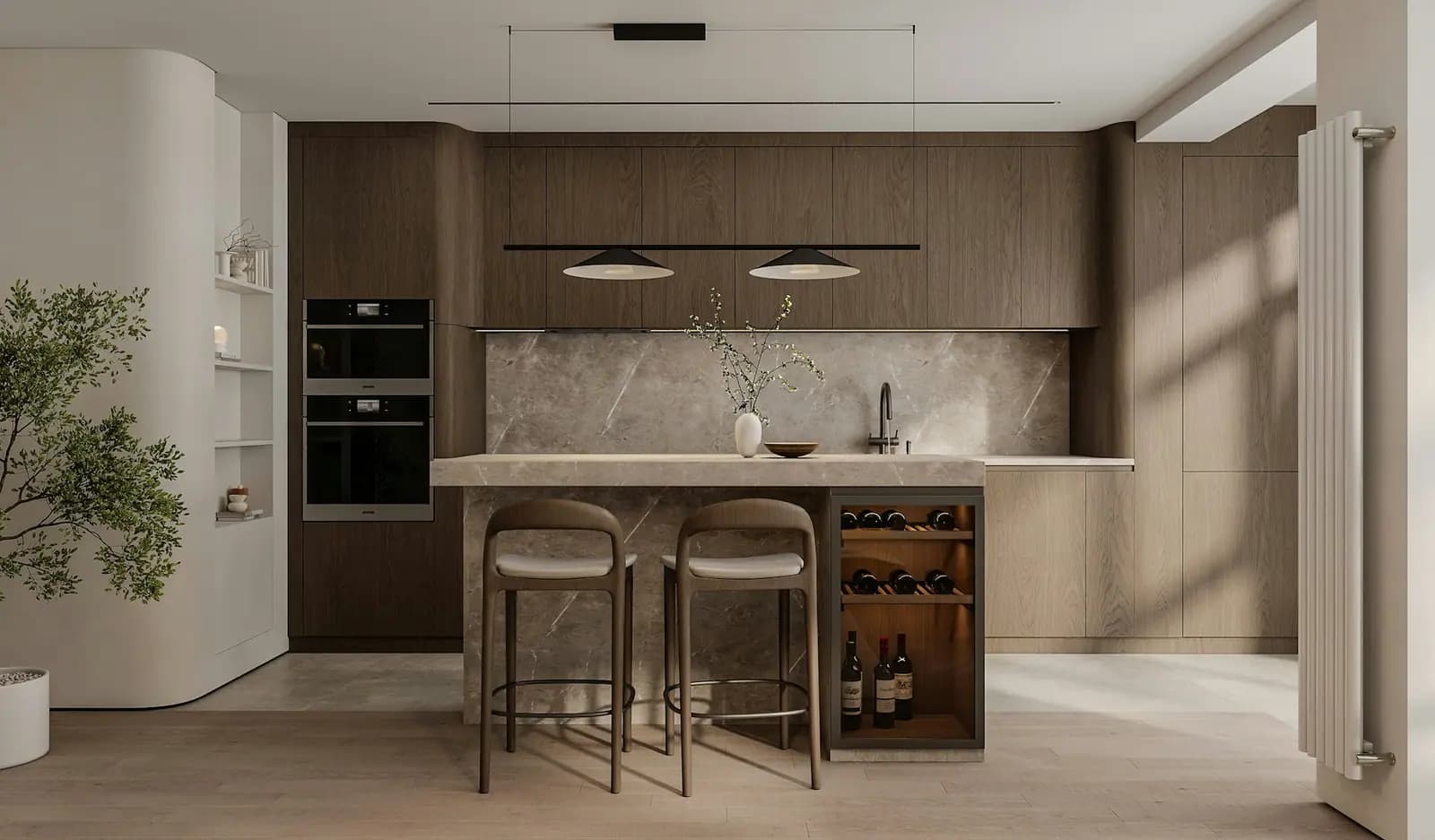
Built-in installation matters
Undercounter wine coolers are designed to exhaust heat through the front grille. Freestanding models installed in a cabinet cutout can overheat because they expect to breathe from the back and sides. If a cooler has struggled since it was installed, confirm it's rated for built-in use before assuming a part has failed.
Temperature swings and condensation
Small swings are normal as the cooling system cycles. Large swings, frost on the back wall, or water pooling inside can point to a door seal, a fan, or a defrost or drain issue. Check the gasket and that bottles aren't holding the door open.
Repair or replace?
Compact thermoelectric coolers are often replaced rather than repaired. Built-in compressor units in custom cabinetry are more often worth a repair quote.
Finding a provider
Fewer repair providers service wine coolers than refrigerators, and some brands use proprietary parts. When you request service, include the brand and whether the unit is thermoelectric or compressor-based so it reaches a provider who works on that type.
Have ready
- Brand and model
- Built-in or freestanding
- Single or dual zone
- Room temperature where it's installed
How a repair request works
- 1Call usTell us the appliance, the brand and what it's doing.
- 2Describe the problemBrand, model, symptoms, and what you've already checked.
- 3Provider reviews itThey contact you to accept and to ask anything they need.
- 4Diagnosis and quoteThe provider confirms any diagnostic fee and the repair price before work starts.
Common questions
Why is my wine cooler warmer than the setting?
Thermoelectric models can't overcome a hot room, and built-in units overheat without front ventilation. If neither applies, a fan, module, or control fault is likely.
What temperature should a wine cooler hold?
It depends on the wine and your preference; the manual lists the unit's range. What matters for a repair diagnosis is whether it holds the temperature you set — measure with a thermometer on a middle shelf.