Oven repair at a glance
- Most common no-heat parts
- Bake element (electric), igniter (gas)
- Measure first
- Oven thermometer, 350 °F, 20 minutes after preheat
- Technician-only
- Gas components, panels, sensors, control boards
- Gas smell
- Leave and call your gas utility or 911 from outside
If you smell gas
Act now
- Don't use switches, the oven, or any flame.
- Leave the home and call your gas utility or 911 from outside.
How electric and gas ovens heat
Electric ovens use a bake element at the bottom and a broil element at the top, switched by the control based on a temperature sensor. Convection models add a fan, sometimes with its own element.
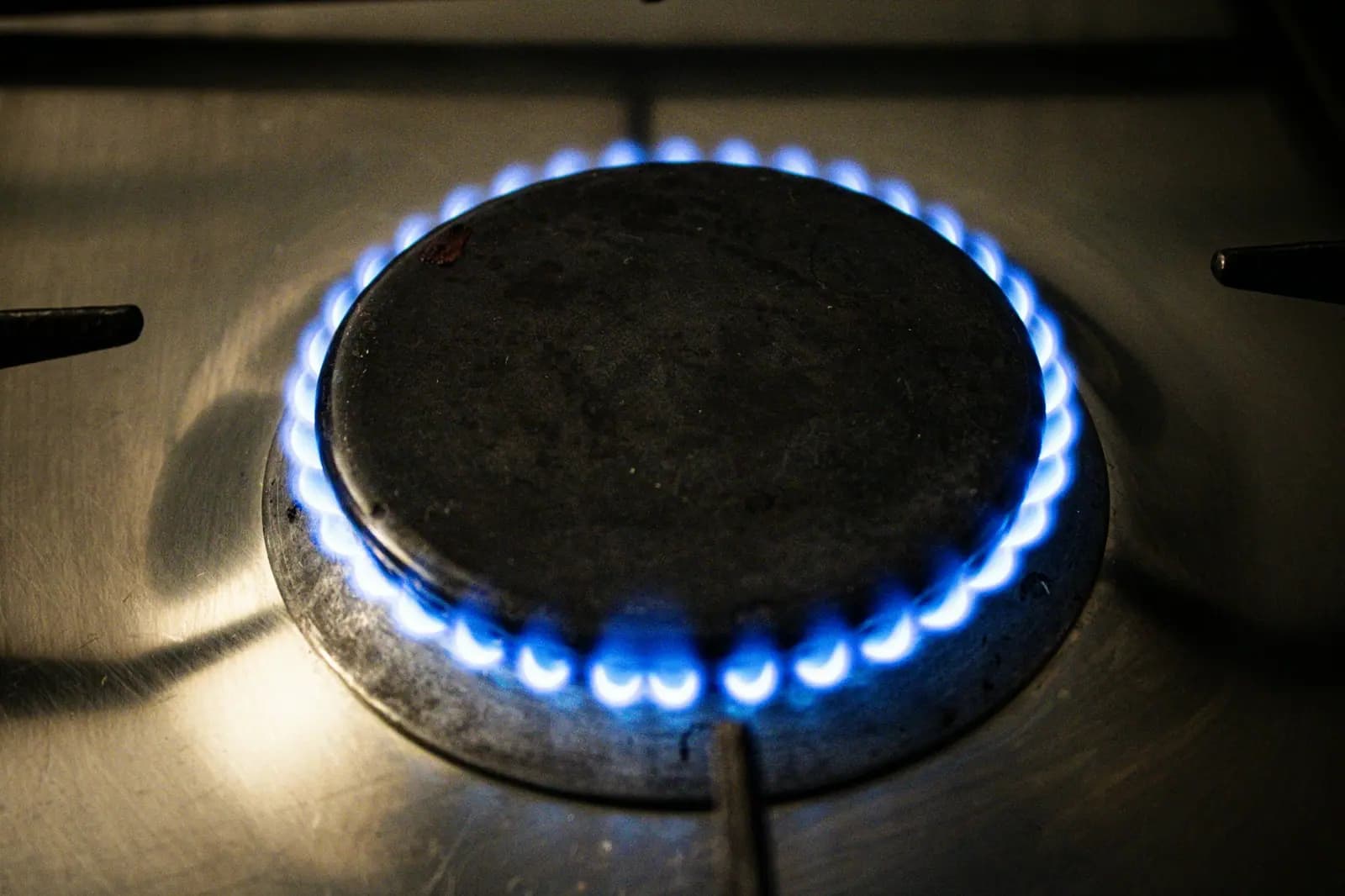
Gas ovens use a hot-surface igniter that must reach a certain temperature before the gas valve opens. A weak igniter can glow but never get hot enough — the oven seems to try, but the burner never lights or takes a long time. This is one of the most common gas oven faults.
Measure before you decide
- Place an oven thermometer in the center of the middle rack.
- Preheat to 350 °F and wait 20 minutes after the preheat signal.
- Read it a few times — ovens cycle above and below the set point.
- If the average is consistently off, check your manual for a temperature-offset setting before requesting service.
Common faults by symptom
| Symptom | Electric | Gas |
|---|---|---|
| No heat at all | Bake element, control relay, wiring | Igniter, gas valve, control |
| Broil works, bake doesn't | Bake element | Bake igniter |
| Runs hot or cold | Temperature sensor, calibration | Sensor, igniter, calibration |
| Uneven baking | Element, convection fan, rack/pan placement | Burner, igniter, pan placement |
| Door locked after self-clean | Lock motor or switch | Lock motor or switch |
Safe checks
- Check that the clock is set and no control lock, delay-start, or Sabbath mode is active.
- Electric: check for a tripped breaker.
- With the oven off and completely cool, look at the bake element for visible breaks or blisters.
- Don't line the oven floor with foil unless your manual allows it — it can disrupt heating.
Leave to a technician
Leave this to a professional
- Igniter, gas valve, or any gas connection
- Removing back or side panels
- Testing elements or sensors with power on
- Door hinge and lock motor work — oven doors are heavy and spring-loaded
Self-clean and door-lock problems
Self-clean cycles run the oven far hotter than normal cooking, and they're a common time for marginal parts — sensors, thermal fuses, lock motors — to fail. If the door stays locked after self-clean, let the oven cool fully, then try cancelling and restarting as your manual describes. If it still won't unlock, request service rather than forcing the door.
What affects oven repair cost
| Factor | Why it matters |
|---|---|
| Gas or electric | Gas igniters and valves are different repairs from electric bake and broil elements. |
| Wall oven or range | Wall ovens often need to be pulled from the cabinet to reach parts. |
| Controls | Electronic control boards vary most in price and availability; discontinued boards may make repair impossible. |
| Door and lock | Door hinges and lock motors are labor-heavy because oven doors are heavy and spring-loaded. |
| Diagnostic fee | Ask whether it's credited toward the repair. |
Is my oven too old to repair?
Ovens have few moving parts, and elements, igniters, and sensors are routine replacements on ovens of most ages. The age question usually comes down to controls: if the control board is discontinued, an otherwise healthy oven may not be repairable.
Repair or replace?
Elements, igniters, and sensors are routine repairs. Control boards vary widely in price and availability; if one is discontinued, replacement may be the practical answer. Wall ovens are often worth repairing because replacements must fit the existing cabinet cutout.
How a repair request works
- 1Call usTell us the appliance, the brand and what it's doing.
- 2Describe the problemBrand, model, symptoms, and what you've already checked.
- 3Provider reviews itThey contact you to accept and to ask anything they need.
- 4Diagnosis and quoteThe provider confirms any diagnostic fee and the repair price before work starts.
Common questions
Why does my gas oven click but not light?
Clicking usually comes from the cooktop spark igniters; most gas ovens use a glowing hot-surface igniter instead. If the oven igniter glows but the burner doesn't light within a minute or two, the igniter is often too weak to open the gas valve. That's a technician repair.
Is uneven baking a repair problem?
Not always. Pan placement, dark pans, crowding, and calibration all affect results. Measure with an oven thermometer first; a failing element, igniter, or convection fan can also cause it.
Can I use my oven if the light or display works but it won't heat?
The display working only means the control has power. The heating circuit — element, igniter, sensor, or relay — is separate and needs diagnosis.
Local guides
Where local climate, storms, water, or altitude change the advice: