Microwave repair at a glance
- Homeowner limit
- Outside the cabinet only
- Never
- Open the cabinet — internal parts hold a dangerous charge
- Stop using if
- Door, hinges, latch, or seals are damaged; sparking
- Usually worth repairing
- Over-the-range and built-in models
Never open the cabinet
Leave this to a professional
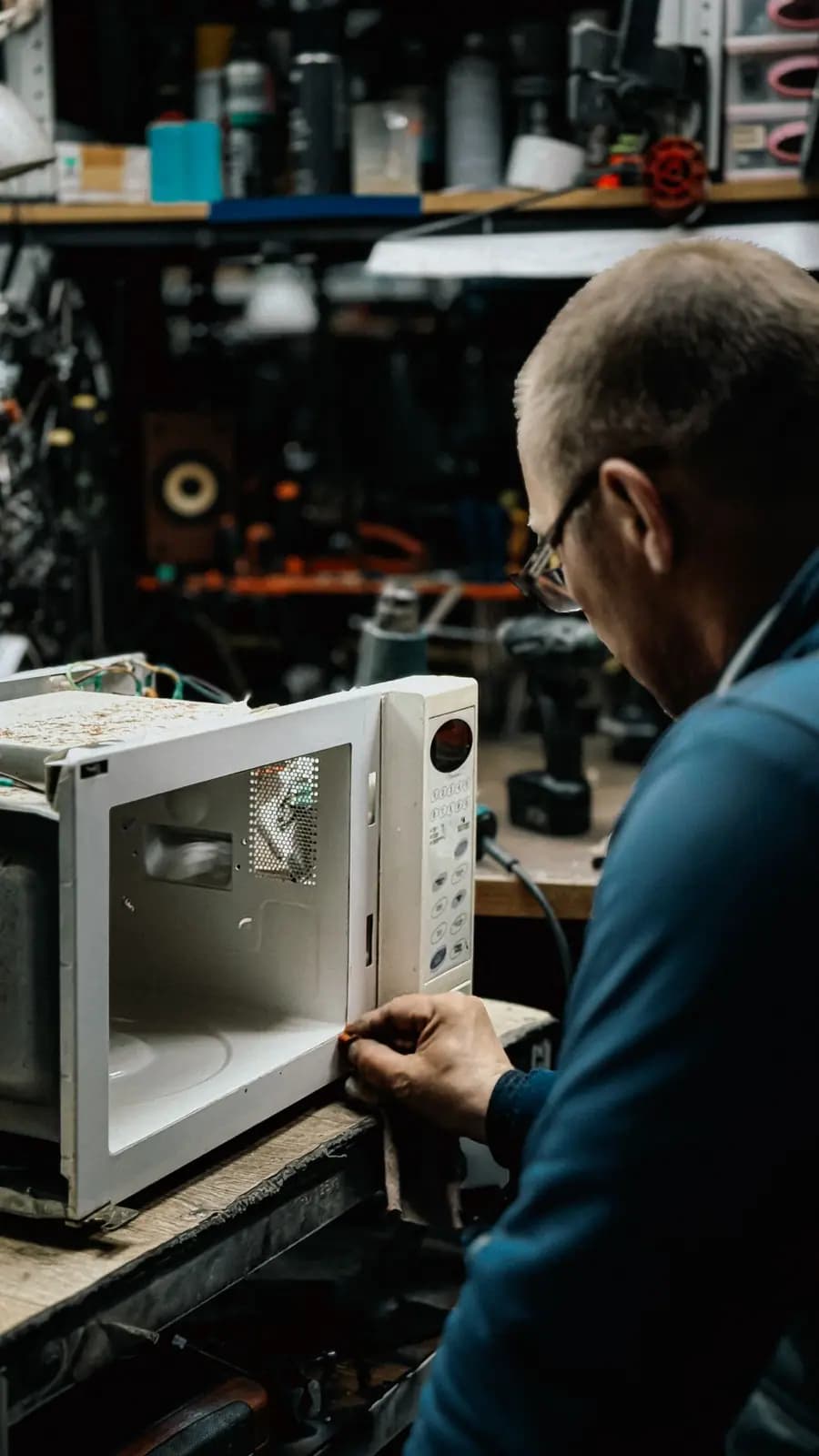
Internal parts can hold a lethal charge after unplugging. Diagnosis and repair inside the cabinet are for qualified technicians only.
Stop using it if
Act now
- The door, hinges, latch, or seals are damaged or the door doesn't close properly (FDA advises against using a microwave with a damaged door)
- You see sparking with nothing metallic inside
- It runs with the door open
Checks you can do from outside
- Plug a small appliance into the same outlet to confirm power
- Check the breaker
- Make sure the door closes fully and nothing is caught in it
- For a turntable that won't turn, check that the roller ring and plate are seated
Repair or replace?
| Type | Usually |
|---|---|
| Countertop | Replacement is often practical unless the unit is high-end |
| Over-the-range | Worth getting a repair quote — replacement includes mounting and venting work |
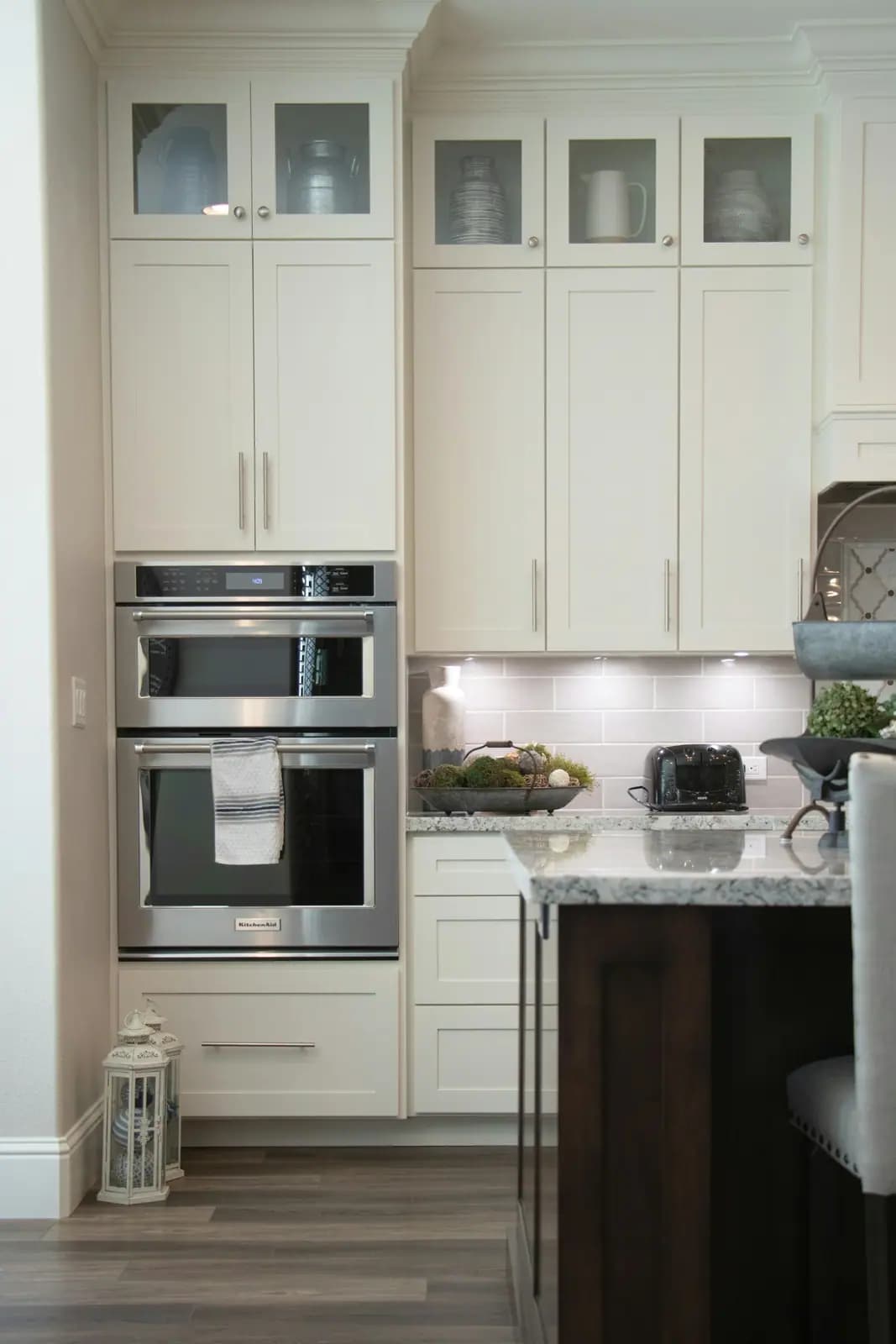
| Built-in / drawer | Usually worth repairing — cabinetry is sized to the unit |
What usually fails
Microwave faults fall into a few groups: no heat (inside the high-voltage section), won't start (door switches, fuses, or the control), turntable or light problems, and control panel faults. Door switches are a common failure because they're used every time the door opens — but they sit inside the cabinet, so diagnosis is still technician work.
Over-the-range considerations
Over-the-range microwaves also act as your range hood. If the fan or light stops working, that's often a separate repair from heating. Replacement involves wall mounting, venting, and sometimes a different cabinet cutout, so getting a repair quote first usually makes sense.
Have ready
- Countertop, over-the-range, or built-in
- Brand and model (inside the door frame or on the back)
- What happens: no heat, won't start, sparks, noise, or a fan or light issue
How a repair request works
- 1Call usTell us the appliance, the brand and what it's doing.
- 2Describe the problemBrand, model, symptoms, and what you've already checked.
- 3Provider reviews itThey contact you to accept and to ask anything they need.
- 4Diagnosis and quoteThe provider confirms any diagnostic fee and the repair price before work starts.
Common questions
My microwave runs but doesn't heat. Can I fix it?
Not safely. No-heat faults are inside the high-voltage section. Have a technician diagnose it, or replace a countertop unit.