Garbage disposal repair at a glance
- Humming
- Usually jammed — clear with the power off
- Silent
- Reset button, breaker or GFCI, switch
- Never
- Put a hand inside the disposal
- Leak from the body
- Usually means replacement
Humming: clear a jam safely
- Switch the disposal off. If it has a plug under the sink, unplug it.
- Use tongs or pliers — never fingers — to remove anything visible.
- Many models have a hex socket in the center of the underside. Turn it back and forth with the wrench supplied with the unit to free the plates (check your manual).
- Press the red reset button on the bottom, restore power, and run water before switching on.
Leaks: where is the water?
| Leak location | Usual cause | Typical fix |
|---|---|---|
| Top, at the sink | Sink flange seal | Reseal or remount |
| Side, at the dishwasher hose | Loose clamp or hose | Tighten or replace hose |
| Side, at the drain pipe | Gasket or loose connection | Gasket replacement |
| Bottom of the unit | Internal seal failure | Replace the disposal |
Leave to a professional
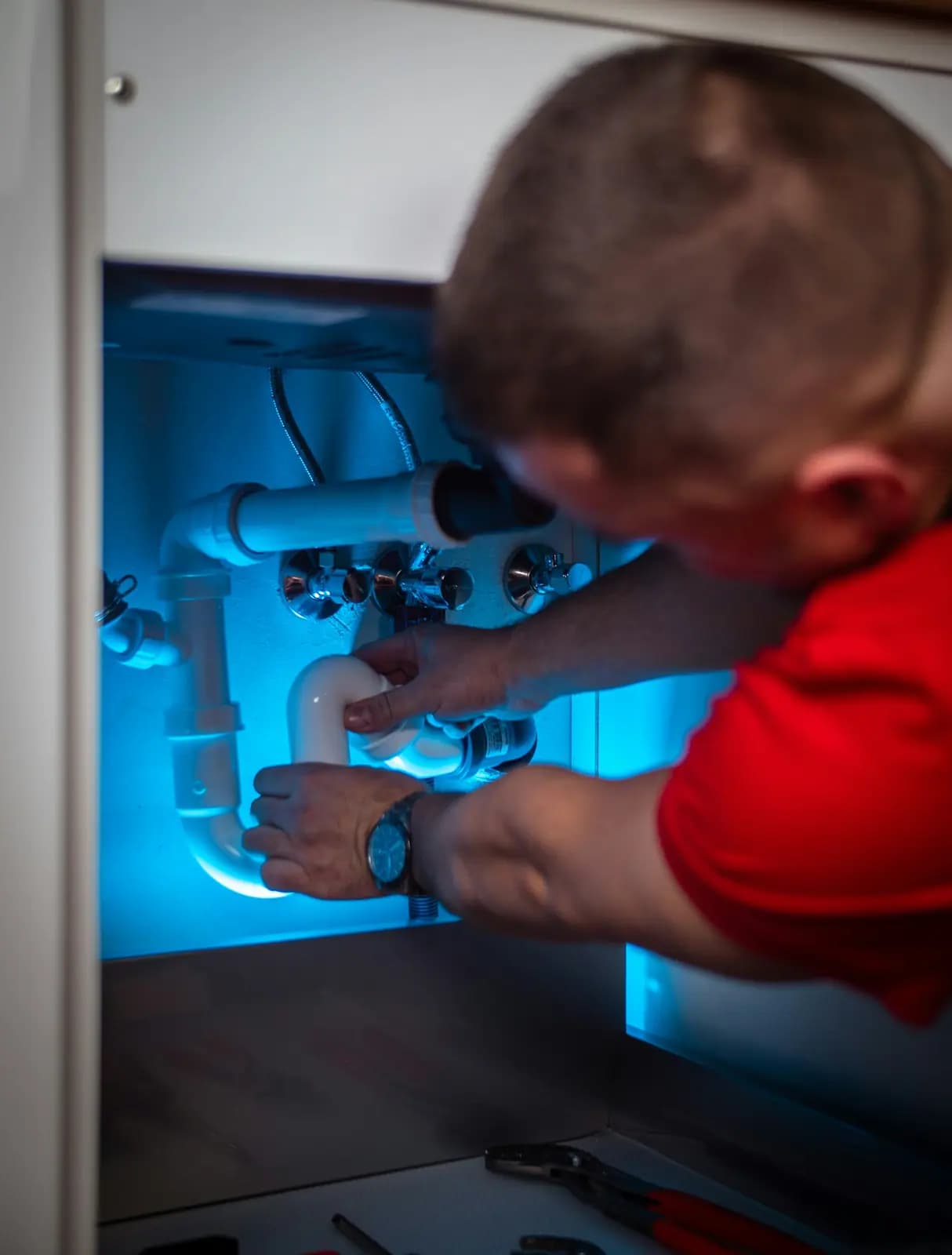
Leave this to a professional
- Wiring at the switch or unit
- Replacing the disposal or changing the mounting
Silent disposal: check power
- Press the red reset button on the bottom of the unit.
- Check the breaker or GFCI outlet under the sink.
- Confirm the wall switch works — some disposals use an air switch button on the counter.
- If it's still silent with power confirmed, the motor or wiring needs a professional.
Prevent the next jam
- Run cold water before, during, and after use
- Avoid fibrous and starchy scraps such as celery strings, onion skins, and potato peels in quantity
- Keep grease, bones, and coffee grounds out
- Feed food in gradually rather than all at once
Disposals and dishwashers
If your dishwasher drains through the disposal, a clogged disposal inlet can leave standing water in the dishwasher. When you replace a disposal, the knockout plug for the dishwasher inlet must be removed, or the dishwasher won't drain at all.
Repair or replace?
Jams and connection leaks are quick fixes. A disposal that leaks from its body, trips the reset repeatedly, or has a burned-out motor is usually replaced rather than repaired.
How a repair request works
- 1Call usTell us the appliance, the brand and what it's doing.
- 2Describe the problemBrand, model, symptoms, and what you've already checked.
- 3Provider reviews itThey contact you to accept and to ask anything they need.
- 4Diagnosis and quoteThe provider confirms any diagnostic fee and the repair price before work starts.
Common questions
Should I repair or replace a leaking garbage disposal?
If it leaks from the bottom of the unit, replacement is usually the answer. Leaks at the flange or hose connections are often repairable.
Why is my garbage disposal humming but not working?
It's almost always jammed. Turn off the switch and cut power at the breaker or unplug it, then use the hex key in the socket at the bottom center to work the flywheel back and forth until it moves freely. Remove the obstruction with tongs, never your hand, then press the reset button.
Where is the reset button on a garbage disposal?
On most models it's a small red or black button on the bottom of the unit, under the sink. If the disposal is completely silent, press it once after the motor has cooled for a few minutes. If it trips again right away, there's likely a jam or a motor problem.
Why is my garbage disposal leaking from the bottom?
A leak from the body or bottom of the disposal usually means the internal seals have failed, and replacement is the normal fix. Leaks at the top flange (sink connection) or at the drain and dishwasher hose connections are often repairable by resealing or tightening.
How much does it cost to fix a garbage disposal?
Clearing a jam or resealing a connection is a modest service call; a disposal leaking from its body is usually replaced, and the cost then depends on the unit chosen and the installation. The provider confirms the price first.
Why does my garbage disposal smell bad?
Food residue builds up on the grind chamber and the underside of the rubber splash guard. With power off, scrub the splash guard, then grind ice cubes and run plenty of cold water. Avoid pouring grease down the drain, which coats the chamber and pipes.
What should never go in a garbage disposal?
Grease and oil, fibrous foods (celery, corn husks, artichokes), potato peels in quantity, pasta and rice that swell, bones, fruit pits, eggshells in bulk, and anything non-food. Run cold water before, during and after grinding.
Can a garbage disposal cause my dishwasher not to drain?
Yes. The dishwasher often drains through the disposal; a clogged disposal — or a new one whose knockout plug wasn't removed — blocks it. Run the disposal and clear any clog, then see dishwasher not draining if water still stands.
How long does a garbage disposal last?
Many disposals last around a decade, depending on use and what goes into them. Rust, leaks from the unit and repeated jams on an older disposal are signs it's time to replace it rather than repair.
Who installs or repairs garbage disposals near me?
Call RepairHearth and tell us whether it's humming, silent or leaking, and from where. We check whether a participating provider serves your ZIP; disposal work can involve plumbing and electrical connections, so the provider confirms what's included and the price first.