Cooktop repair at a glance
- Induction first check
- Magnetic cookware sized to the zone
- Cracked glass
- Stop using; switch off at the breaker
- Technician-only
- Induction boards, elements, switches, gas parts
- Repair-or-replace pivot
- Replacements must fit the counter cutout
Induction: check the pan first
Induction only works with magnetic cookware. If a magnet doesn't stick firmly to the bottom of the pan, the zone won't heat — and many cooktops show a blinking symbol instead. The pan also needs to be roughly the size of the zone.
- Test with a pan a magnet sticks to firmly
- Check whether a control lock is on
- Note any error code before requesting service
Fault patterns by cooktop type
| Type | Common faults | Notes |
|---|---|---|
| Induction | Power/generator boards, fans, sensors | Electronics-heavy; brand-specific parts |
| Radiant (glass) | Elements, switches, limiter | A cracked top must be replaced |
| Gas | Igniters, spark module, valves | Same safety boundaries as gas ranges |
Stop and call if
Act now
- The glass is cracked — turn off the cooktop at the breaker and don't use it
- You smell gas — leave and call your gas utility or 911 from outside
- A zone won't turn off
Gas cooktop burner
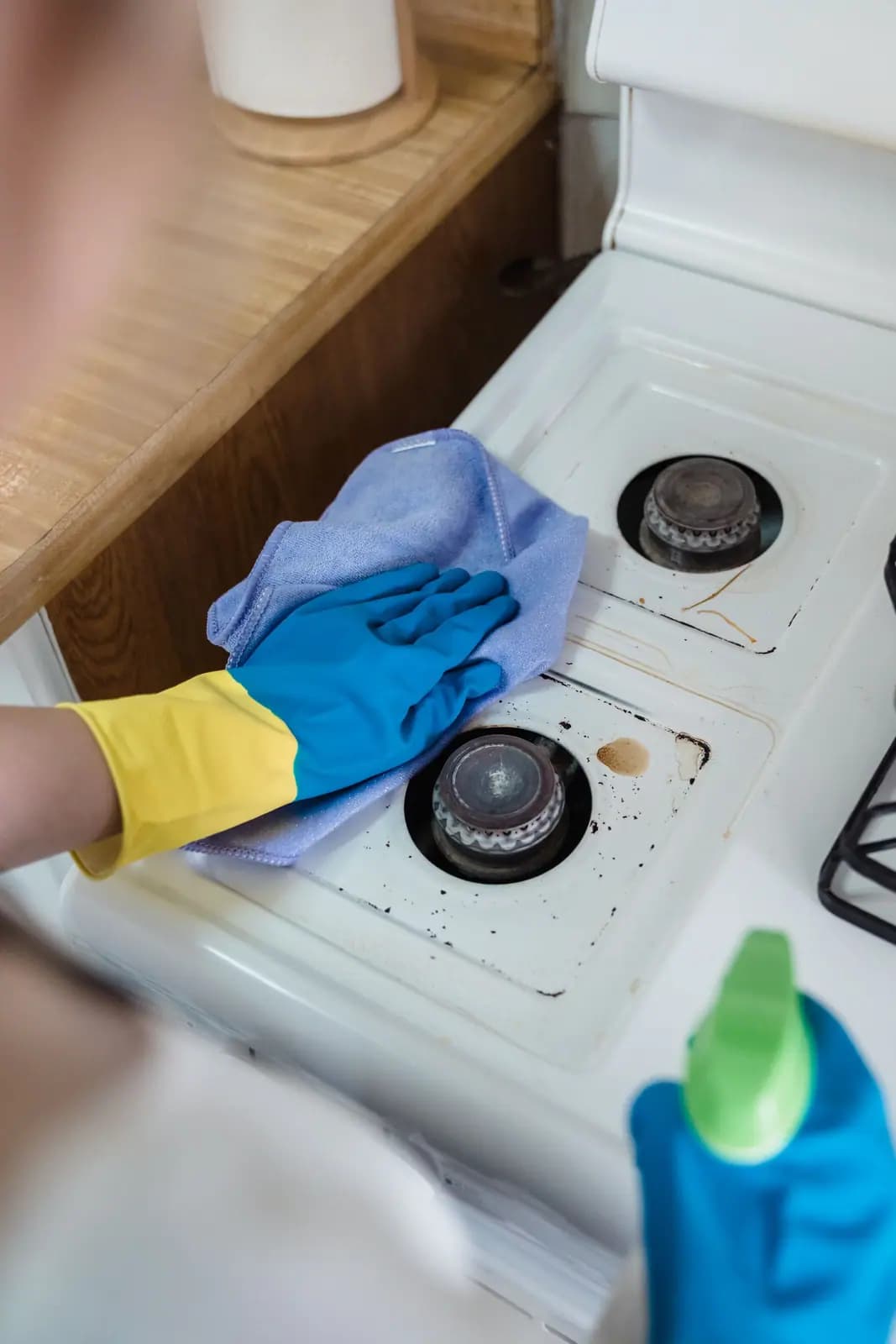
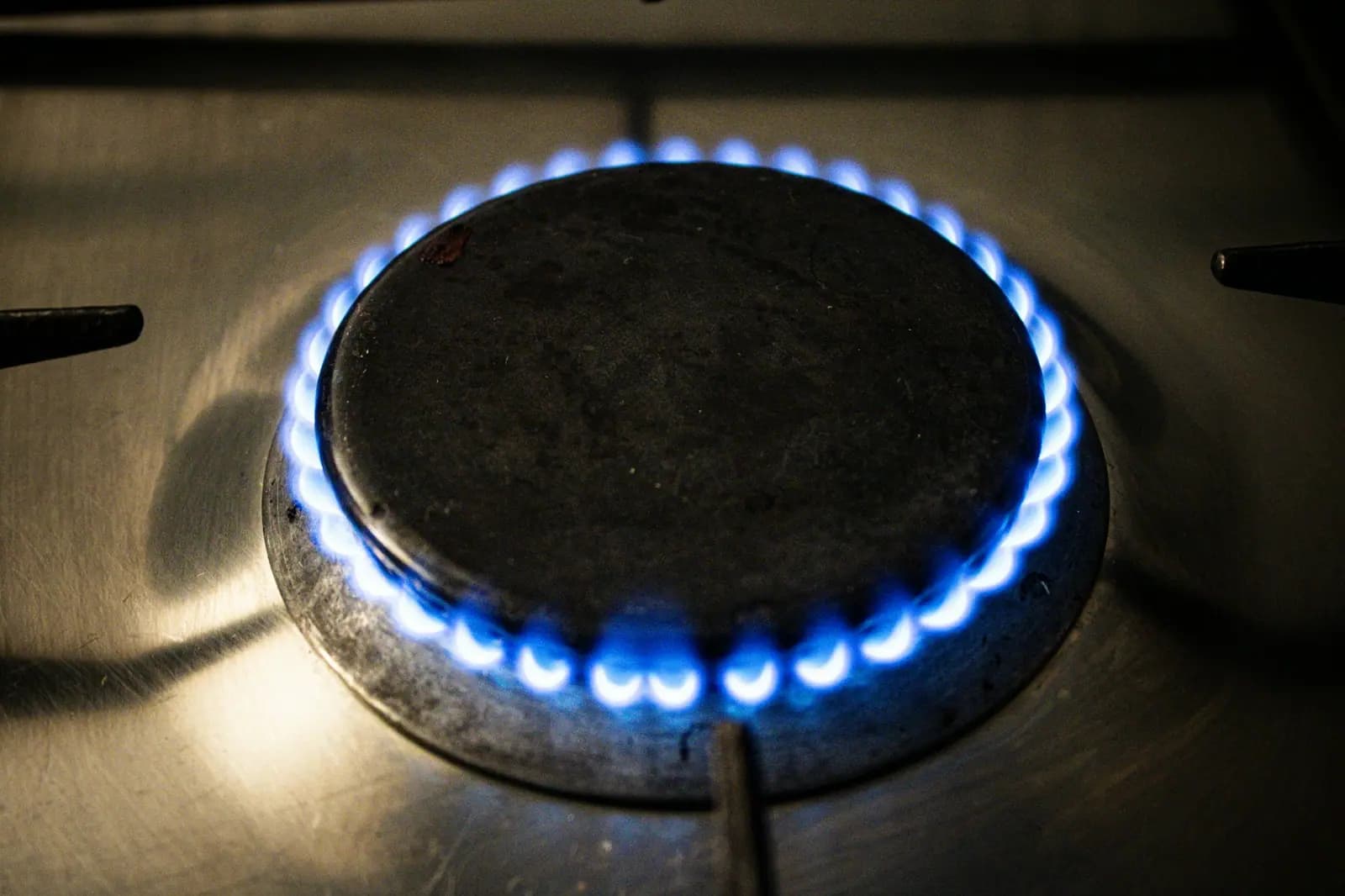
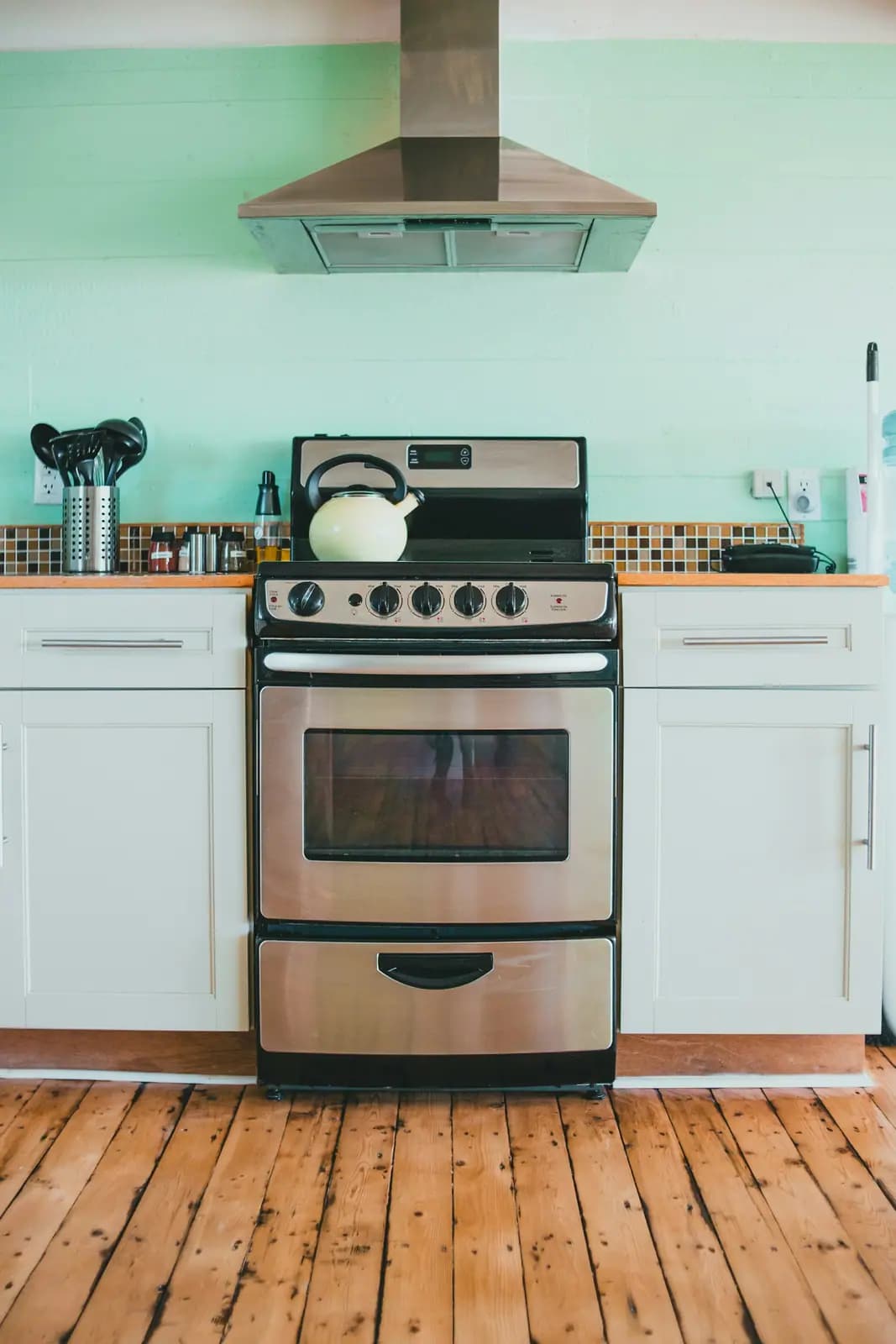
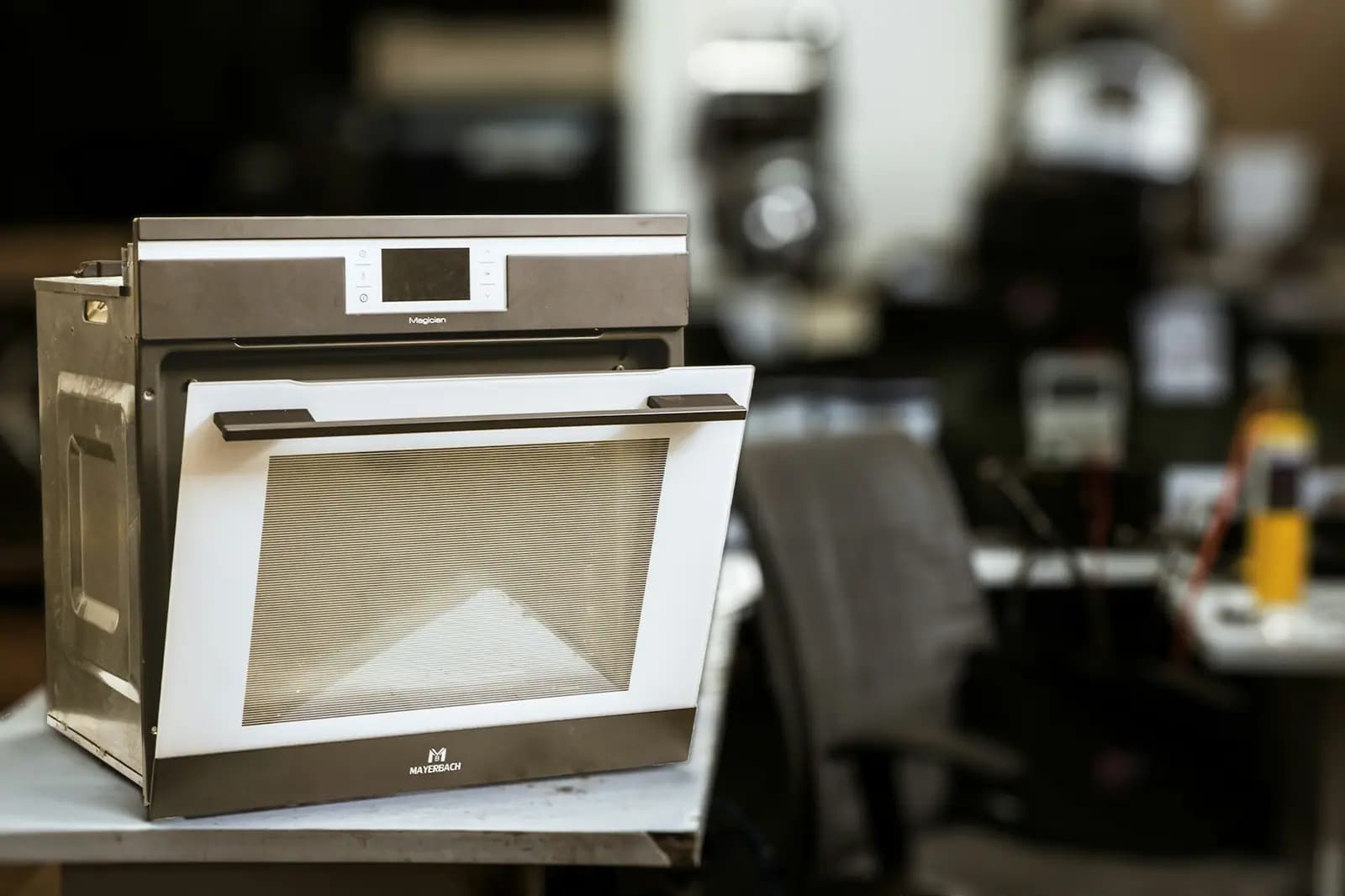
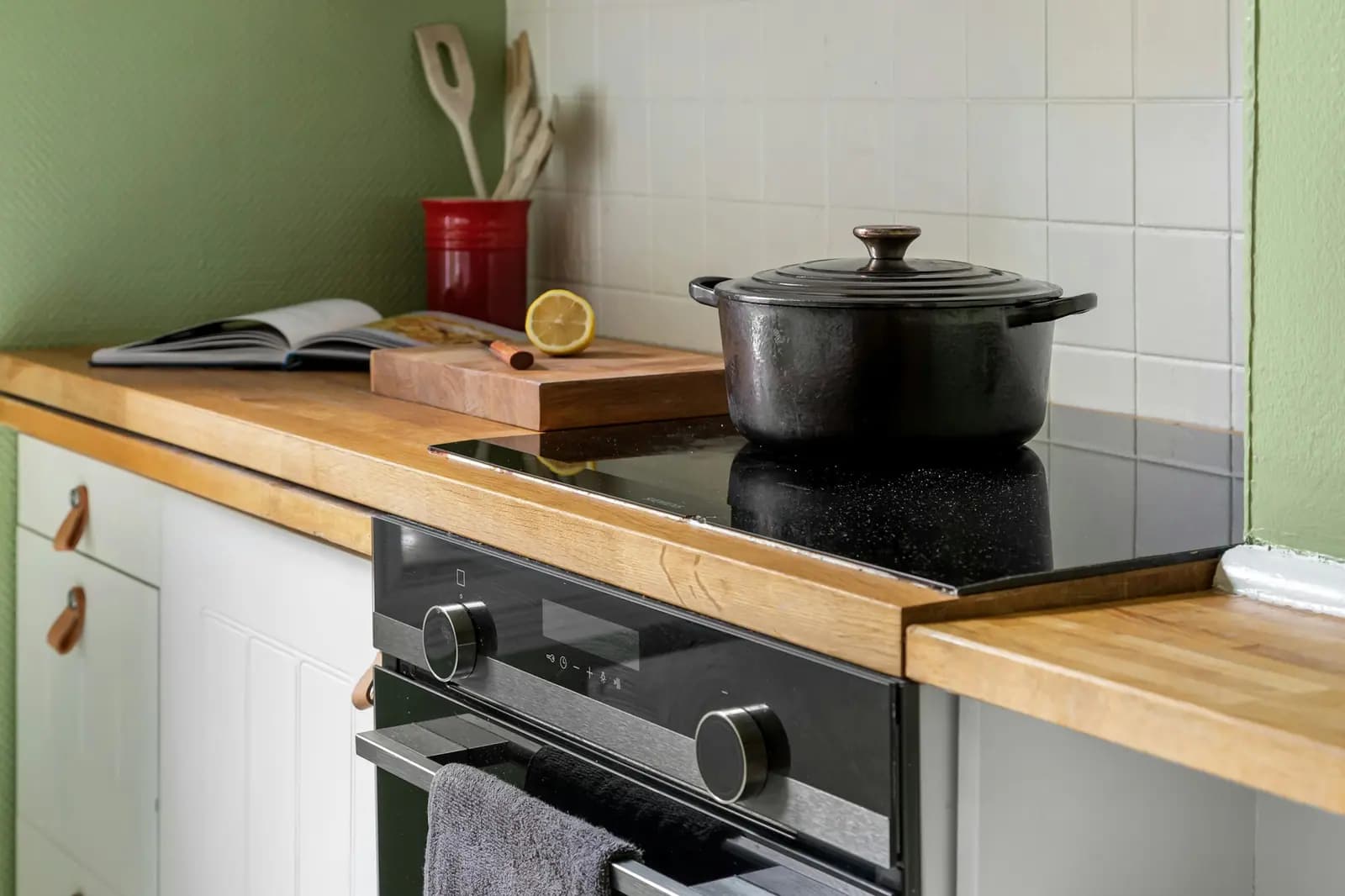
Example photos of the condition — different appliances, not RepairHearth jobs. Photos: Liliana Drew (Pexels) · Mark Owen Wilkinson Hughes (Unsplash).
Radiant glass cooktops
Smooth electric cooktops heat with coiled ribbon elements under the glass. A zone that won't heat usually means the element or its control switch has failed; a zone that's stuck on high usually means the switch or a relay on the control board. Many radiant cooktops have a limiter that cycles the element to protect the glass — normal cycling on and off isn't a fault.
Gas cooktops
Gas cooktops use the same spark ignition as gas ranges: a module sends a spark to each burner's electrode when the knob is turned. Spills and moisture cause most ignition problems. See our guide to a gas burner that won't light for the safe checks.
How a gas burner lights
- 1Knob + valveReleases gas to one burnerTechnician
- 2Spark moduleSends pulses to every igniterTechnician
- 3IgniterKeep dry and free of food residueYou can check
- 4Burner cap + headMust sit flat and alignedYou can check
- 5FlameSteady and mostly blue
Repair or replace?
Elements, switches, and igniters are routine repairs. Glass tops are the most expensive cooktop part, and induction electronics vary widely by brand. Because a cooktop is cut into the counter, a replacement has to match the cutout — repair is often the simpler route.
Have ready
- Brand and model (on the underside of the cooktop or in the manual)
- Gas, radiant, or induction
- Which zones are affected and any error code
How a repair request works
- 1Call usTell us the appliance, the brand and what it's doing.
- 2Describe the problemBrand, model, symptoms, and what you've already checked.
- 3Provider reviews itThey contact you to accept and to ask anything they need.
- 4Diagnosis and quoteThe provider confirms any diagnostic fee and the repair price before work starts.
Common questions
Why won't my induction cooktop heat my pan?
The pan probably isn't magnetic enough, is too small for the zone, or a control lock is active. If a magnetic pan of the right size still won't heat, request service.
Why does my induction cooktop say there is no pan?
The zone doesn't detect a magnetic pan of the right size. Test the pan with a magnet — it should stick firmly to the base — and center it on a zone it covers well. Very small pans or warped bases may not register. If a known-good pan isn't detected, the zone or its control needs service.
How much does it cost to repair a cooktop?
It depends on the type and the part: knobs, switches and igniters on gas cooktops are modest; radiant elements cost more; glass replacement and induction power boards are the expensive end. Access in the counter can add labor. The provider confirms the price first — see the repair cost guide.
Can a cracked glass cooktop be repaired?
Not by patching — a crack means the glass top has to be replaced, and you should stop using it, since spills can reach the elements and wiring underneath. Whether replacing the glass is worth it depends on the part price for your model compared with a new cooktop.
Why does my gas cooktop burner light and then go out?
Often the burner cap isn't seated or the ports are partly clogged, so the flame isn't stable. On some cooktops, a flame-sensing safety device shuts the gas off if it doesn't sense flame. Clean and dry the burner and reseat the cap; if it still goes out, call for service.
Why does my induction cooktop make a buzzing noise?
Some buzzing or humming at high power is normal with induction, especially with multi-layer or lightweight pans. Cooling fans also run during and after cooking. Loud clicking with no heat, or a fan that never stops, is worth having checked.
Is it safe to use one burner if another is broken?
On an electric or induction cooktop with no burning smell, sparking or cracks, using the working zones is generally fine until the repair. On a gas cooktop, don't use it if you smell gas or a burner won't stay lit — turn it off and follow our urgent safety steps.
Should I replace my cooktop instead of repairing it?
Repair is usually worth it for knobs, switches, igniters and single elements. Replacement becomes reasonable for a cracked glass top on an older unit or a failed induction power board when the part costs approach a new cooktop — check that a new one fits the existing counter cut-out.
Who repairs induction and gas cooktops near me?
Call RepairHearth and say whether your cooktop is gas, radiant electric or induction, with the brand and model. We check whether a participating technician who services that type covers your ZIP; the provider confirms the visit and price first.
Why won't my cooktop turn on at all?
Check whether a control lock is active (often a key or lock symbol), then the circuit breaker. Induction and radiant cooktops have power and control boards that can fail; a technician should check anything beyond the lock and breaker because of the high voltage involved.