Short answer
Dry the floor and, if the refrigerator has an ice maker or dispenser, close its water supply valve. Then look at where the water appears: water inside under the crisper drawers usually means a clogged defrost drain; water at the front or back of the floor usually comes from the supply line, filter housing, inlet valve, or drain pan.
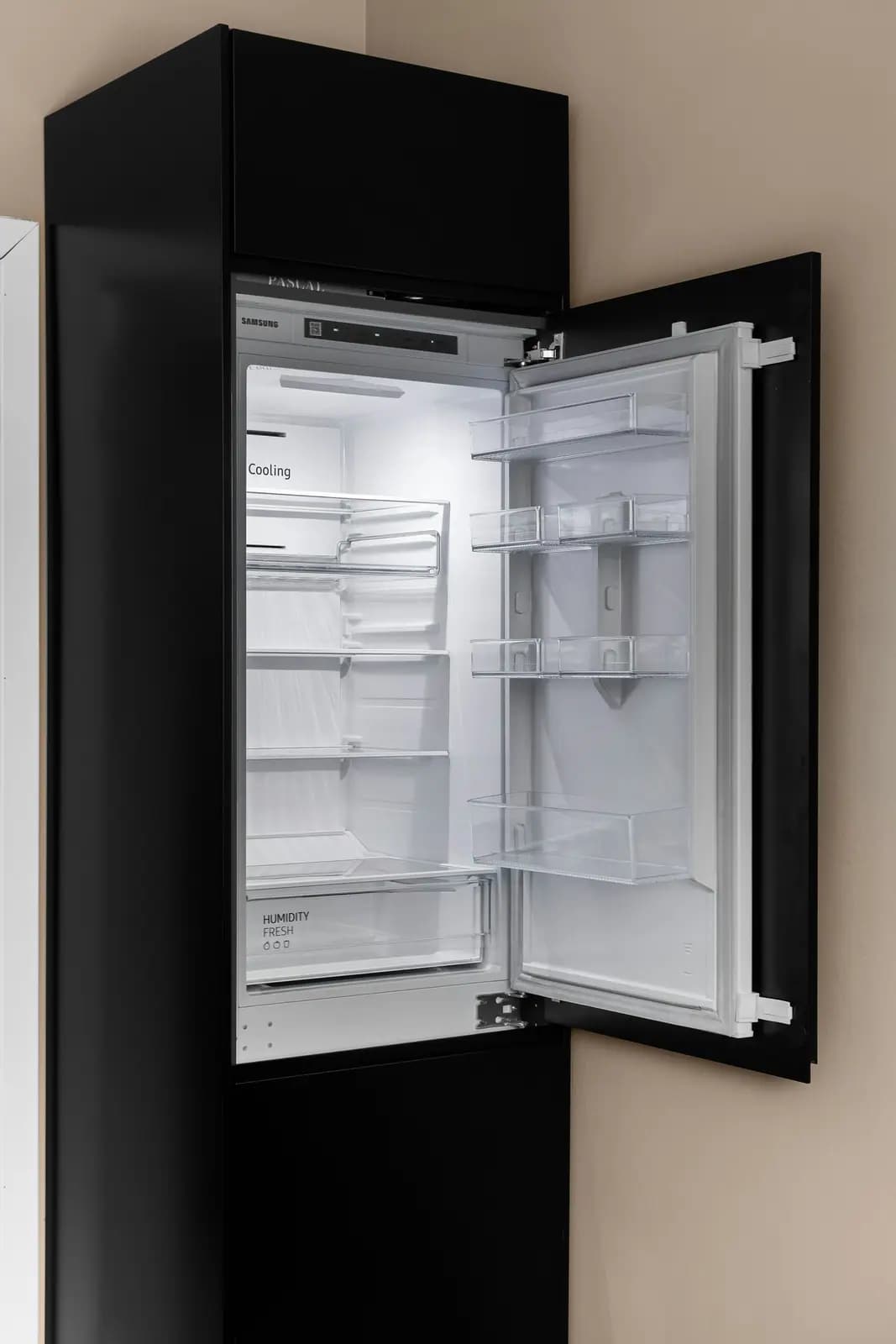
Do this first
Act now
- Wipe up standing water to prevent slips and floor damage.
- Close the shut-off valve feeding the refrigerator's water line (often behind the unit or under the sink).
- If water has reached an outlet or cord, switch off that circuit at the breaker before touching anything.
Possible causes, in the order they're usually ruled out
- Water filterNot fully seatedYou can check
- Supply lineLoose fitting or cracked tubingYou can check
- Defrost drainClogged or frozen drain tubeTechnician
- Drain panCracked or out of placeTechnician
- Inlet valveLeaking valve bodyTechnician
Where is the water?
| Location | Likely source | Can you check it? |
|---|---|---|
| Inside, under the crisper drawers | Clogged or frozen defrost drain | Look for ice at the drain hole; clearing it properly is technician work on most models |
| Inside the freezer floor as ice | Defrost drain freezing over | Note it for the technician |
| Floor at the front | Filter housing, dispenser, or drain pan | Reseat the filter per the manual |
| Floor at the back | Supply line fitting, inlet valve, or drain pan | Look for a wet fitting or cracked line |
Refrigerator defrost system
- 1Defrost controlTimer or board starts the cycleTechnician
- 2Defrost heaterWarms the evaporator coilTechnician
- 3Thermostat / sensorEnds the cycle when the coil is clearTechnician
- 4Drain trough + tubeIce here causes leaks insideYou can check
- 5Drain panUnder the front grille; should be dry or dampYou can check
Safe checks
- Remove and reseat the water filter exactly as the manual shows; a filter not fully locked can drip.
- With help, carefully move the refrigerator out and look for a damp or cracked supply line.
- Check that the unit is level side-to-side and tilted back slightly if the manual specifies — this helps doors close and water drain correctly.
Before: A twisted or torn gasket leaves a gap: a sheet of paper slides out freely and warm, humid air leaks in, causing frost and sweating.
After: Gasket seated evenly around the door; the paper test shows resistance at every point.
Original illustration of a common condition — not a photo of a specific repair.
Don't attempt
Leave this to a professional
- Replacing the inlet valve (it's electrical and connects to pressurized water)
- Removing interior panels to reach a frozen drain
Repair outlook
Most refrigerator leaks are repairable: drain clearing, supply line replacement, inlet valve replacement, or reseating a drain pan. Repeated drain freezing can point to a defrost component that also needs attention. Leaks rarely justify replacement on their own.
What to request
A symptom points to likely causes; only testing confirms one. If the checks above don't solve it, request a diagnosis for refrigerator repair and mention what you've already checked.
Common questions
Why does water collect under my refrigerator's crisper drawers?
The defrost drain is usually blocked by debris or ice, so meltwater from the defrost cycle overflows into the fresh-food section instead of draining to the pan underneath.
Need refrigerator repair? Call now
Pricing, timing, and appointments are confirmed by the repair provider.
Our phone line is being set up. Please check back soon.