Short answer
When a refrigerator runs but won't cool, the most common causes are blocked air vents, an evaporator fan that has stopped, frost choking the evaporator coil after a defrost failure, or dirty condenser coils. A compressor or refrigerant problem is possible but less common. If the freezer is still cold and only the fresh-food side is warm, airflow or defrost is the likely area.
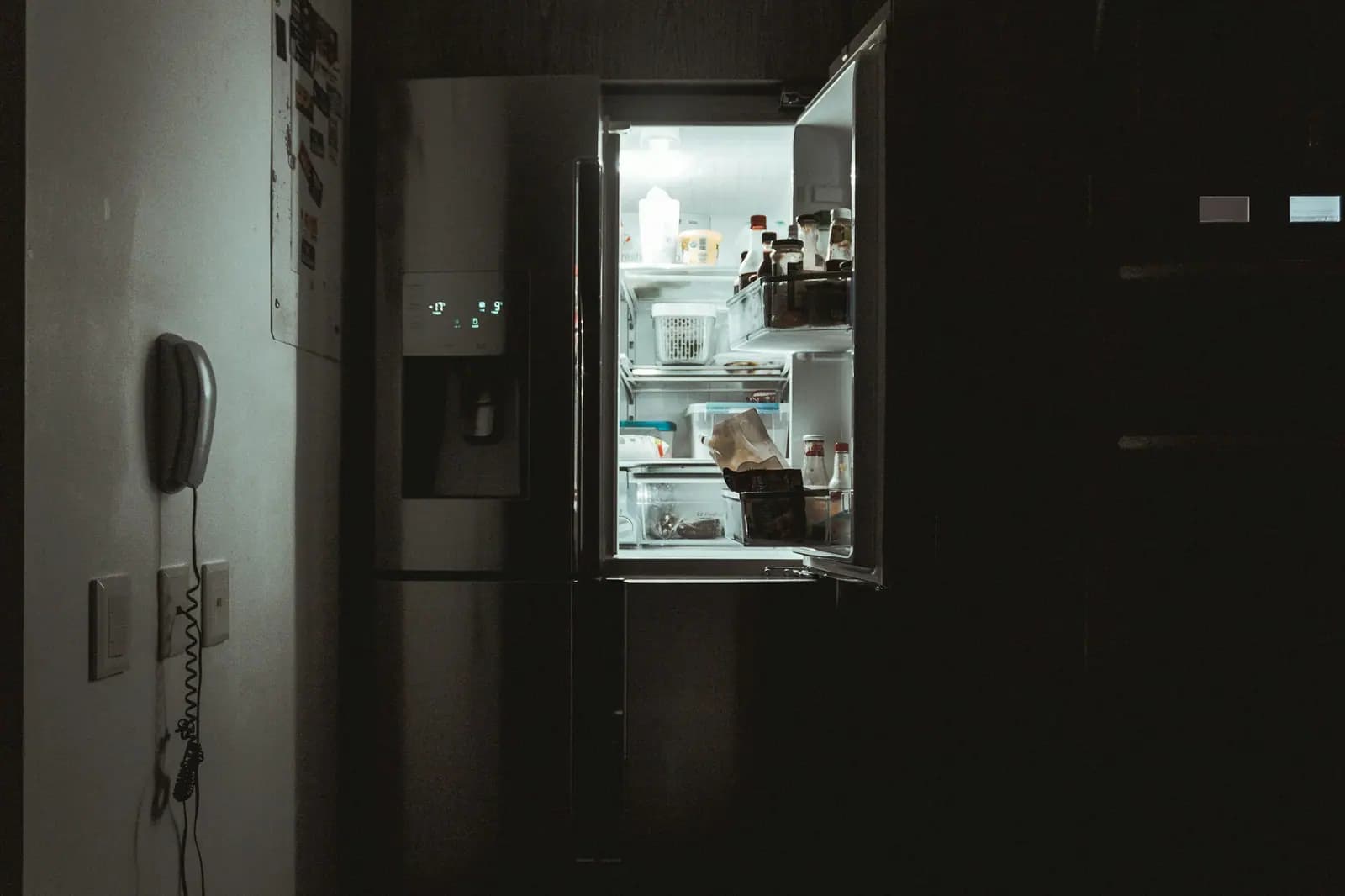
Protect your food now
Safety
- Keep the doors closed while you troubleshoot.
- Perishable food above 40 °F for more than two hours should be discarded, per FDA guidance.
- Move milk, meat, and medicine to a cooler with ice if the fresh-food section is clearly warm.
Possible causes, in the order they're usually ruled out
- Settings & powerTemperature setting, demo mode, outletYou can check
- AirflowVents blocked by food; door not sealingYou can check
- CondenserDusty coils, blocked grille, condenser fanCheck, then technician
- Evaporator fanMoves cold air from the freezerTechnician
- Defrost systemHeater, thermostat, or control lets the coil ice overTechnician
- ControlsTemperature sensor, damper, control boardTechnician
- Sealed systemCompressor or refrigerant — EPA-certified onlyTechnician
Read the pattern
| What you notice | Possible cause | Parts involved |
|---|---|---|
| Freezer cold, fresh-food warm | Cold air isn't being moved into the fresh-food section | Evaporator fan, air damper, blocked vent |
| Frost on the freezer back panel | The defrost system isn't melting frost | Defrost heater, thermostat/sensor, timer or control |
| Both sections warm, unit runs constantly | Heat isn't being released, or low refrigerant | Condenser fan, dirty coils, sealed system |
| Both warm, compressor silent, clicking | Compressor isn't starting | Start relay, compressor, control |
| Lights and display off | No power | Outlet, breaker, cord, control |
Safe checks, in order
- Confirm the setting and that the unit isn't in demo/showroom mode.
- Measure with an appliance thermometer in a glass of water on the middle shelf after several hours.
- Clear food away from the vents along the back wall or between compartments.
- Open the freezer and press the door switch: on many models you should hear the evaporator fan. Silence is useful information for the technician.
- Check that the condenser area at the bottom isn't blocked and there's clearance around the cabinet.
- If your manual explains how, unplug the unit and clean the condenser coils.
Before: Dust and pet hair blanket the coil, so heat can't escape. The compressor runs longer and cooling margins shrink.
After: Clean coil with clear airflow — heat leaves easily. Clean only as your manual describes, with the unit unplugged.
Original illustration of a common condition — not a photo of a specific repair.
Don't attempt
Leave this to a professional
- Adding refrigerant or opening the sealed system (EPA-certified technicians only)
- Removing the freezer back panel to chip ice off the coil — you can puncture tubing
- Testing parts with the refrigerator plugged in
How a technician diagnoses it
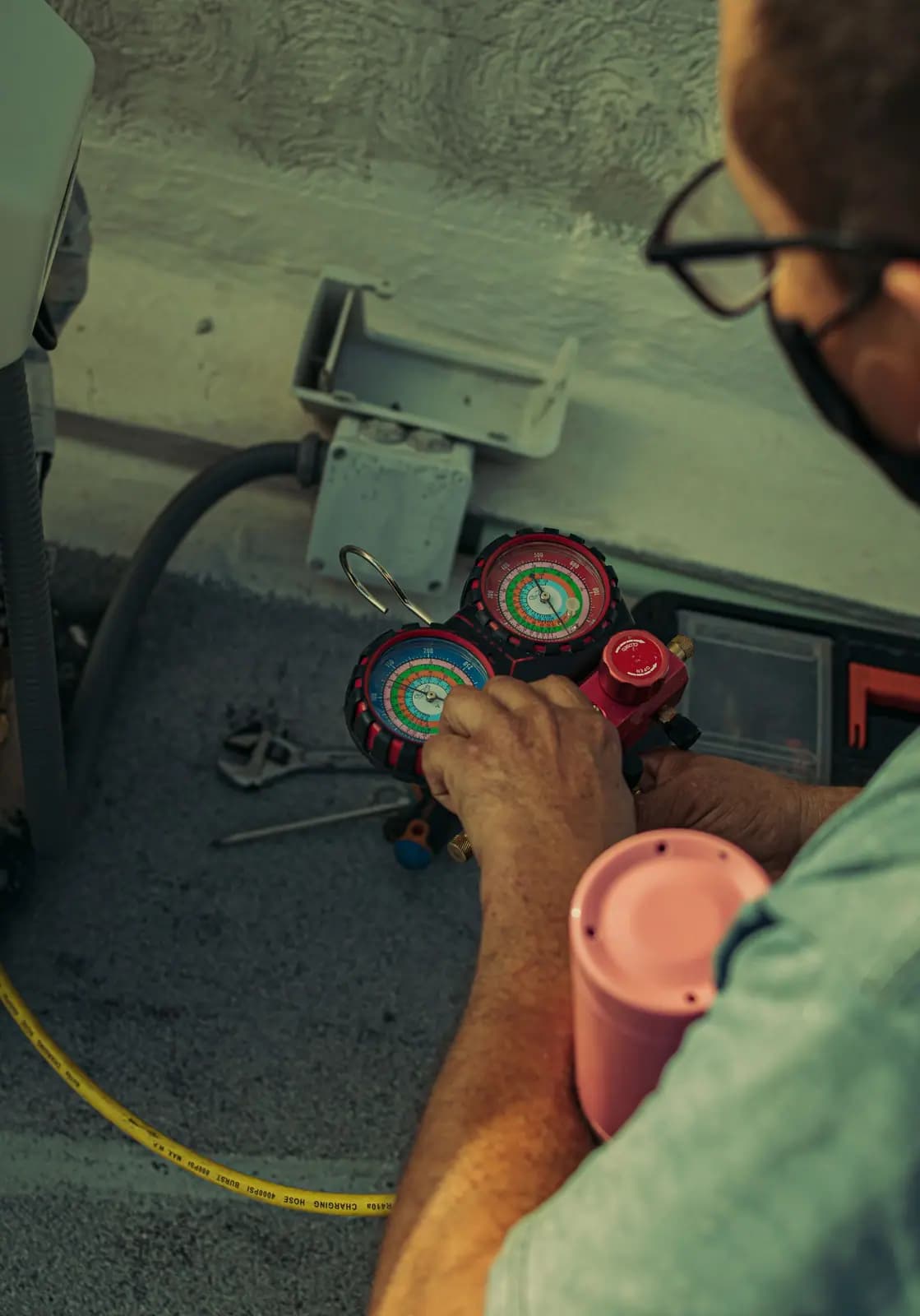
Expect the technician to check temperatures, listen for the evaporator and condenser fans, look for frost patterns on the evaporator, and test the defrost components and compressor start circuit with the unit safely de-energized where required. Sealed-system diagnosis uses pressure and temperature readings and must be done by a certified technician.
Cost and repair-or-replace
Fans, defrost parts, and damper repairs are typically the less expensive outcomes. A compressor or refrigerant leak is the expensive one, and that's when comparing the written quote against a new refrigerator makes sense. Parts availability for your model and how hard the unit is to access also affect the price.
What to request
A symptom points to likely causes; only testing confirms one. If the checks above don't solve it, request a diagnosis for refrigerator repair and mention what you've already checked.
Local guide: Houston.
Common questions
Why is my freezer cold but my fridge warm?
The fresh-food section depends on cold air from the freezer. A stopped evaporator fan, an iced-over coil, or a blocked vent or damper interrupts that flow.
Can unplugging the fridge reset it?
Unplugging for a few hours with the doors open can melt evaporator ice and temporarily restore cooling — which suggests a defrost fault. Move food out first, protect the floor from meltwater, and request a diagnosis: the problem will usually return.
Need refrigerator repair? Call now
Pricing, timing, and appointments are confirmed by the repair provider.
Our phone line is being set up. Please check back soon.