Freezer repair at a glance
- Target temperature
- 0 °F
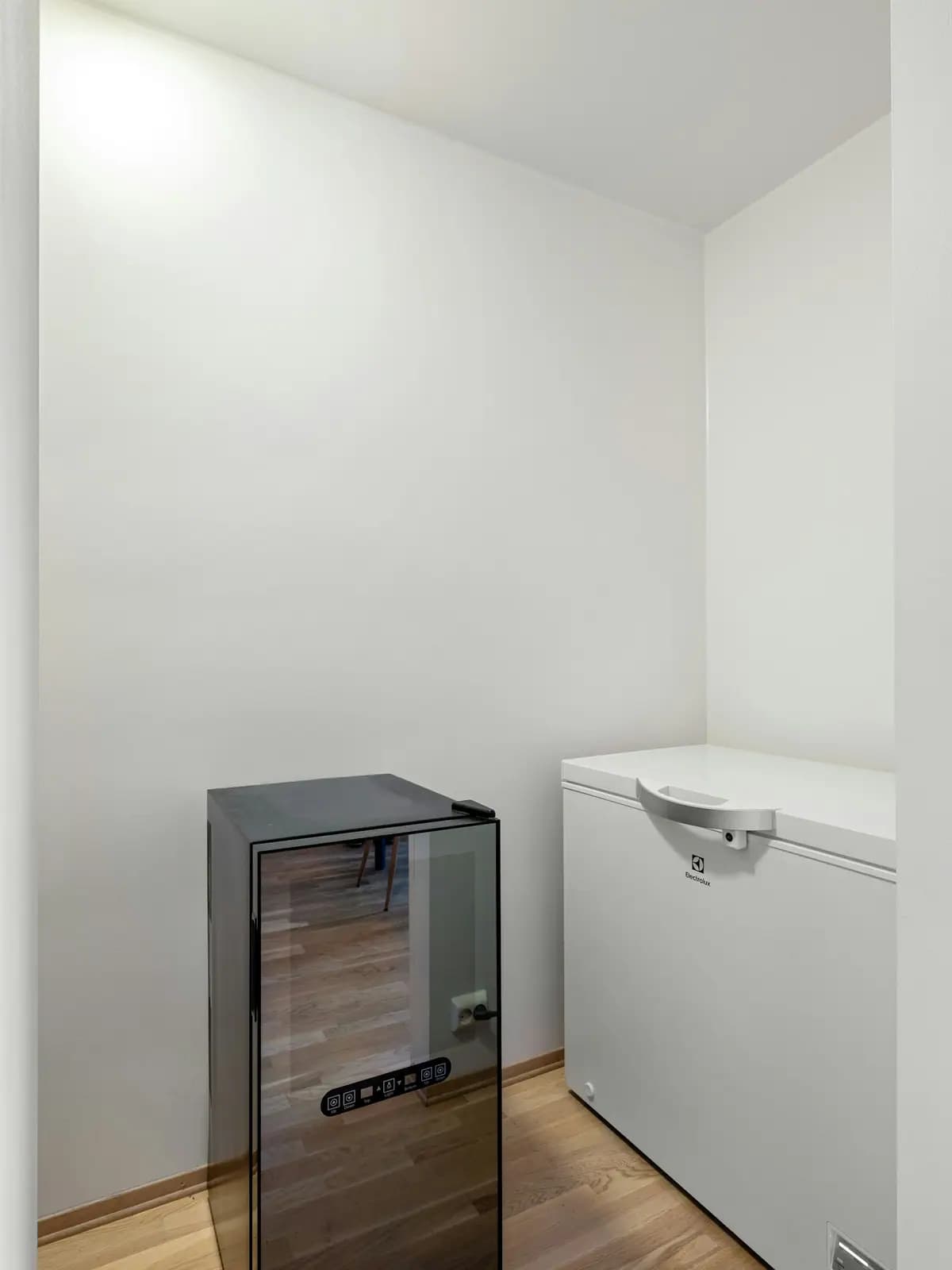
- Two main types
- Manual-defrost chest freezers; frost-free uprights
- First safe check
- Gasket seal, lid/door closing, location's ambient temperature
- Technician-only
- Defrost system, fans, any sealed-system work
- Repair-or-replace pivot
- Sealed-system failure on lower-cost chest units
Protect the food first
Safety
- Keep the lid or door closed; a full freezer holds temperature longer than a half-empty one.
- Food that still has ice crystals or is at 40 °F or below can generally be refrozen — see FoodSafety.gov's outage chart for specifics.
- Move food to another freezer or a cooler with ice if the temperature is rising.
Chest vs upright
| Chest freezer | Upright freezer | |
|---|---|---|
| Defrost | Usually manual — frost buildup over time is expected | Often frost-free with an automatic defrost system |
| Typical frost cause | Lid seal, overdue manual defrost | Door seal or defrost fault |
| Garage placement | Check the manual's ambient temperature range | Same — some models aren't rated for hot or cold garages |
Safe checks
- Check the temperature with an appliance thermometer, not just the dial.
- Inspect the gasket and close the door or lid on a sheet of paper; it should grip.
- Make sure packages aren't blocking vents (uprights) or holding the lid open (chests).
- Confirm clearance around the cabinet per the manual, especially in garages and closets.
- For manual-defrost chest freezers, defrost as the manual describes when frost gets thick.
Leave to a technician
Leave this to a professional
- Defrost heater, thermostat, and timer diagnosis
- Fan motors and control boards
- Any sealed-system or refrigerant work (EPA-certified only)
How a freezer keeps food frozen
A compressor pumps refrigerant through a cold coil (the evaporator) inside the cabinet and releases heat through a condenser outside it. Chest freezers often have coils built into the walls, so the whole cabinet stays cold and frost builds slowly over time. Frost-free uprights use a fan to move air over a hidden coil and a defrost heater to melt frost off it periodically — which adds parts that can fail.
Freezer frost buildup
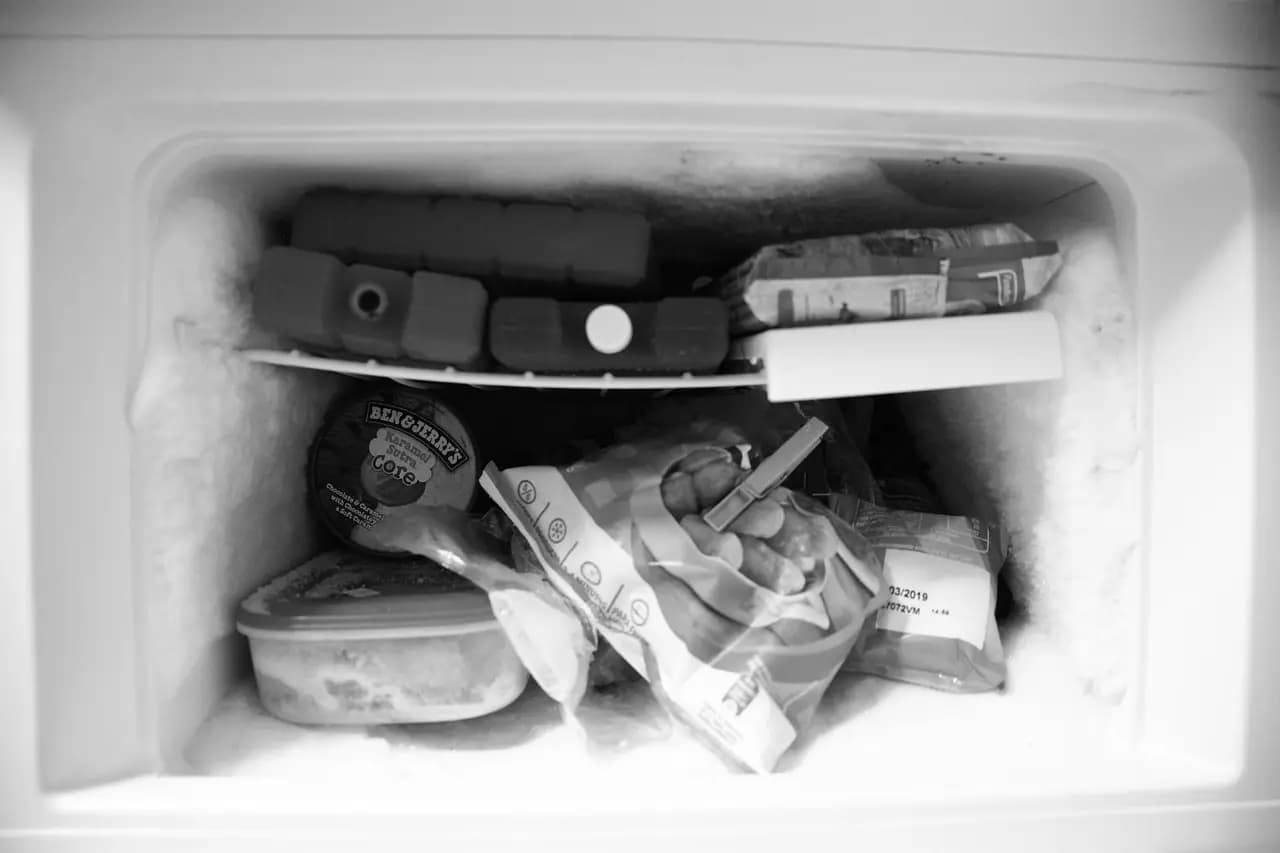
Example photos of the condition — different appliances, not RepairHearth jobs. Photos: juliopablo (Pixabay) · S. Laiba Ali (Unsplash).
What a technician usually checks
- Actual cabinet temperature and whether the compressor runs
- Condenser fan and coil condition
- Evaporator frost pattern and the defrost circuit on frost-free models
- Gasket seal and door or lid alignment
- Sealed-system performance — by an EPA-certified technician only
Garage and basement freezers
Standalone freezers often live in garages or basements, where room temperature swings more than in a kitchen. Manufacturers list an ambient range in the manual. In a very hot space the freezer runs constantly and may not hold 0 °F; in a very cold one, some models stop cycling normally. If problems line up with hot or cold weather, location may be the cause rather than a failed part.
Have ready
- Chest or upright, and whether it's frost-free
- Where it's located (garage, basement, kitchen)
- Thermometer reading and how long it's been warm
- Brand and model
What affects freezer repair cost
| Factor | Why it matters |
|---|---|
| Chest or upright | Frost-free uprights have fans and defrost systems that chest freezers usually don't. |
| The system involved | Gaskets and defrost parts are smaller jobs; sealed-system work is the largest. |
| Location | Garage and basement freezers may need clearance or relocation, not just parts. |
| Food value | A full freezer raises the stakes on timing; ask about scheduling when you request service. |
| Diagnostic fee | Ask whether it's credited toward the repair. |
Is my freezer too old to repair?
Simple chest freezers often run for a long time with few repairs; their weak point is the sealed system. A refrigerant leak or compressor failure on an inexpensive chest freezer often costs more than replacing it — get the quote before deciding.
Repair or replace?
Gaskets, fans, and defrost components are worth repairing. A sealed-system failure on an inexpensive chest freezer often costs more than replacing it — ask for the quote before approving work.
How a repair request works
- 1Call usTell us the appliance, the brand and what it's doing.
- 2Describe the problemBrand, model, symptoms, and what you've already checked.
- 3Provider reviews itThey contact you to accept and to ask anything they need.
- 4Diagnosis and quoteThe provider confirms any diagnostic fee and the repair price before work starts.
Common questions
Can a freezer work in a hot garage?
Only if the model is rated for it. Manufacturers specify an ambient temperature range; outside it, a freezer may run constantly or fail to hold temperature. Check your manual.
How cold should a freezer be?
0 °F, per FDA guidance.
Local guides
Where local climate, storms, water, or altitude change the advice: