Dishwasher repair at a glance
- Most common fix
- Cleaning the filter and spray arms
- Drain path to check
- Filter, disposal inlet, air gap, hose
- Technician-only
- Pumps, inlet valve, heater, latch, controls
- Leak risk
- Slow leaks can damage cabinets and subfloor unseen
How water moves through a dishwasher
The inlet valve fills the tub with a measured amount of water. A circulation pump pushes it through the spray arms, a filter in the bottom traps food, and a drain pump sends the dirty water out through a hose to the sink drain or garbage disposal. A heater helps with washing and drying on many models.
Dishwasher water path
- 1Inlet valveFills the tubTechnician
- 2Circulation pumpDrives the spray armsTechnician
- 3Spray armsClear blocked holesYou can check
- 4FilterClean monthlyYou can check
- 5Drain pump + hoseTo disposal or sink drain
Symptom guide
| Symptom | Check first | Then a technician may test |
|---|---|---|
| Standing water after the cycle | Filter, disposal inlet, drain hose kinks | Drain pump, check valve |
| Gritty or cloudy dishes | Filter, spray-arm holes, loading, water temperature | Circulation pump, inlet valve fill level, heater |
| Water on the floor | Door gasket debris, wrong detergent, level | Pump seals, hoses, inlet valve |
| Dishes stay wet | Rinse aid, unloading bottom rack first | Heater, vent, control |
| Won't start | Door fully latched, control lock, breaker | Door latch/switch, control board |
Dishwasher drain and filter
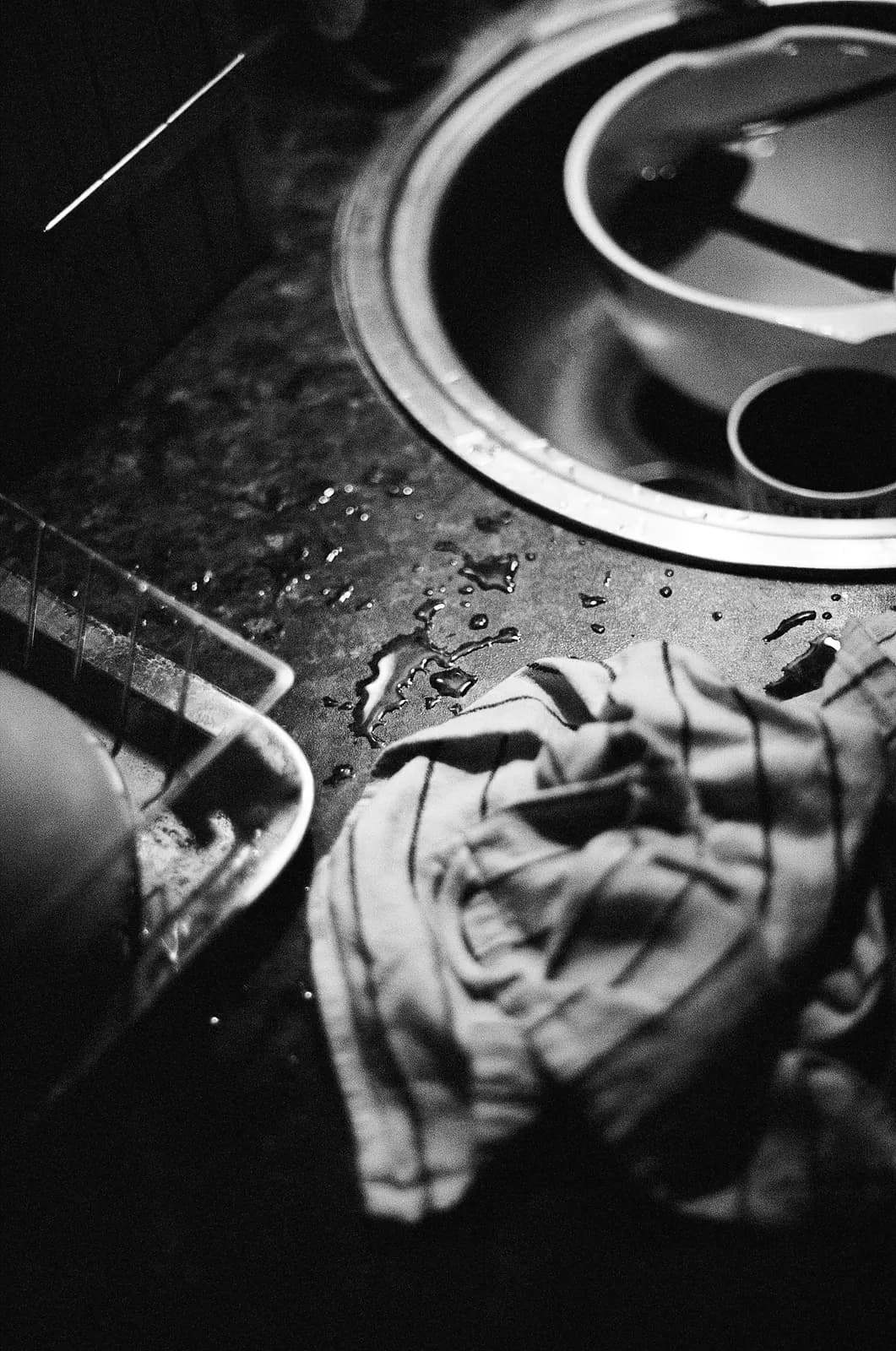
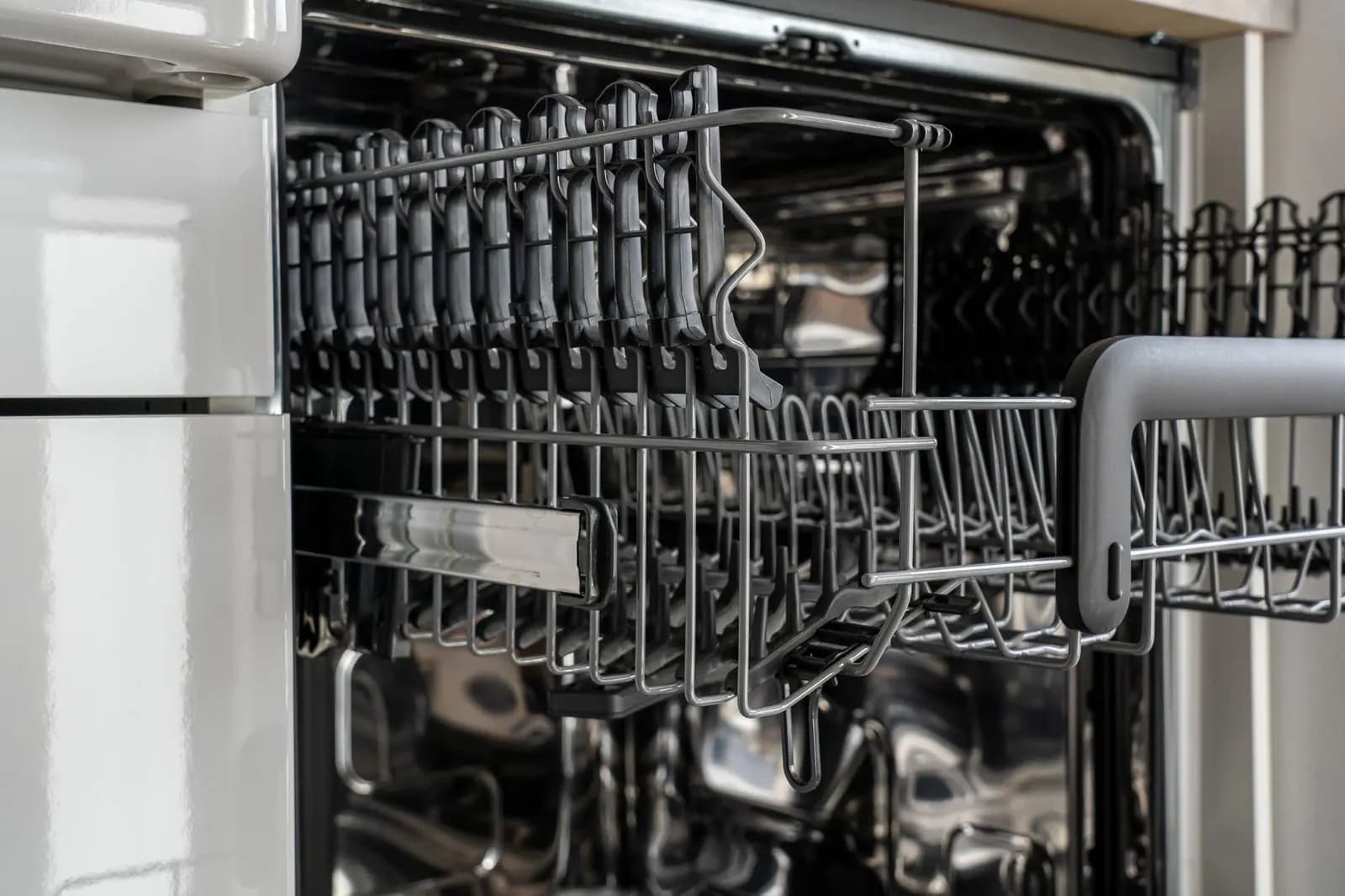
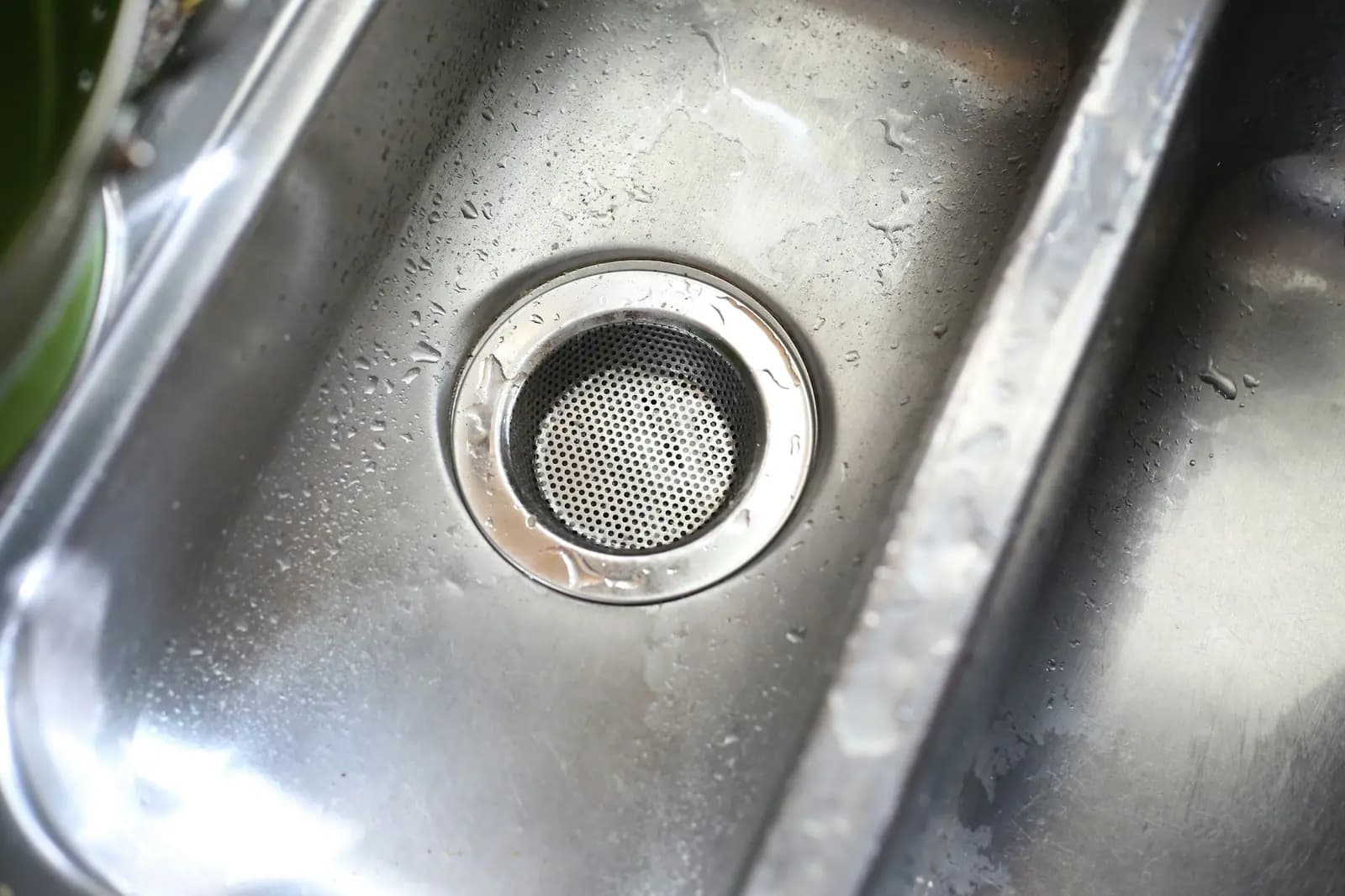
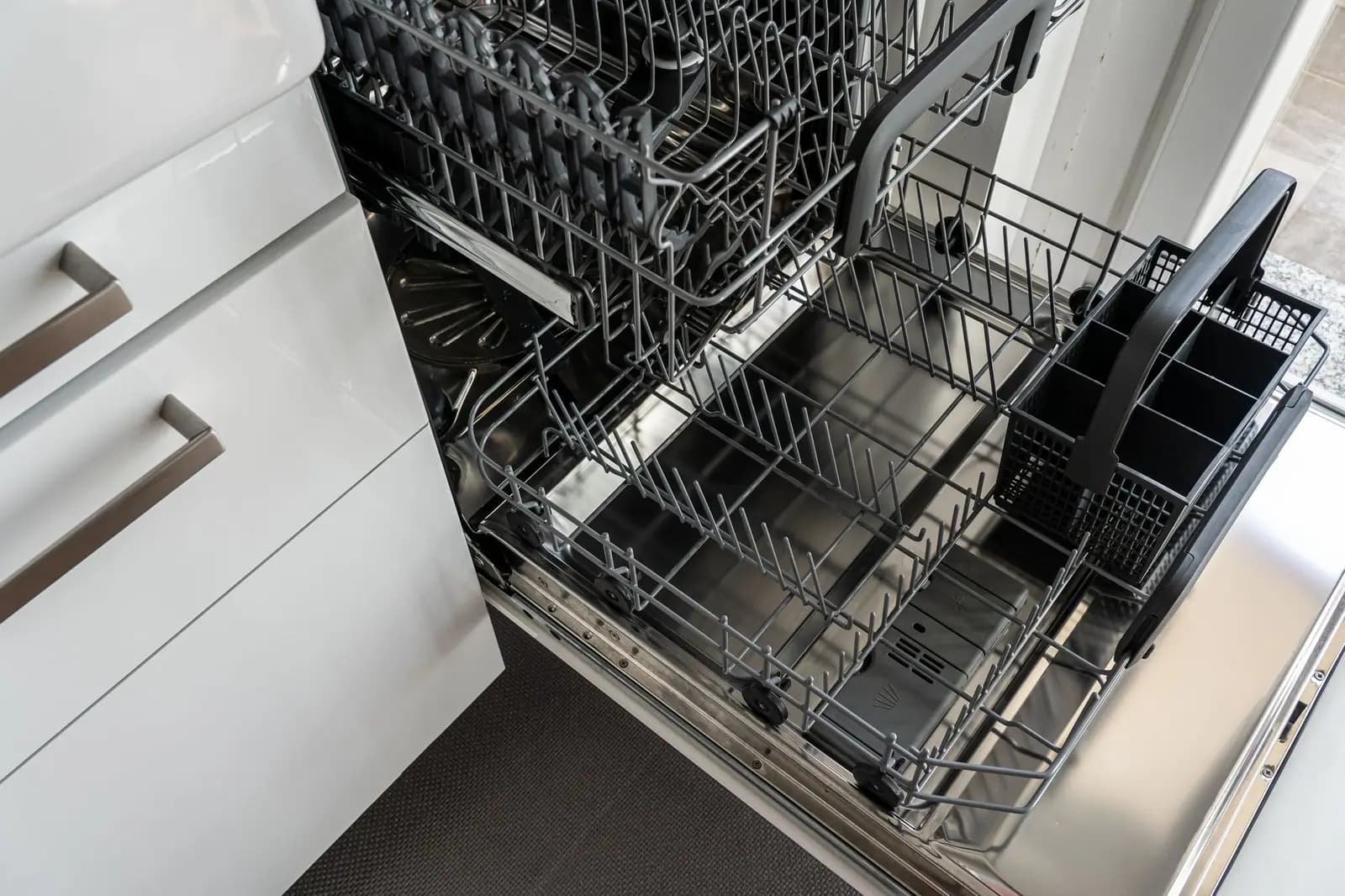
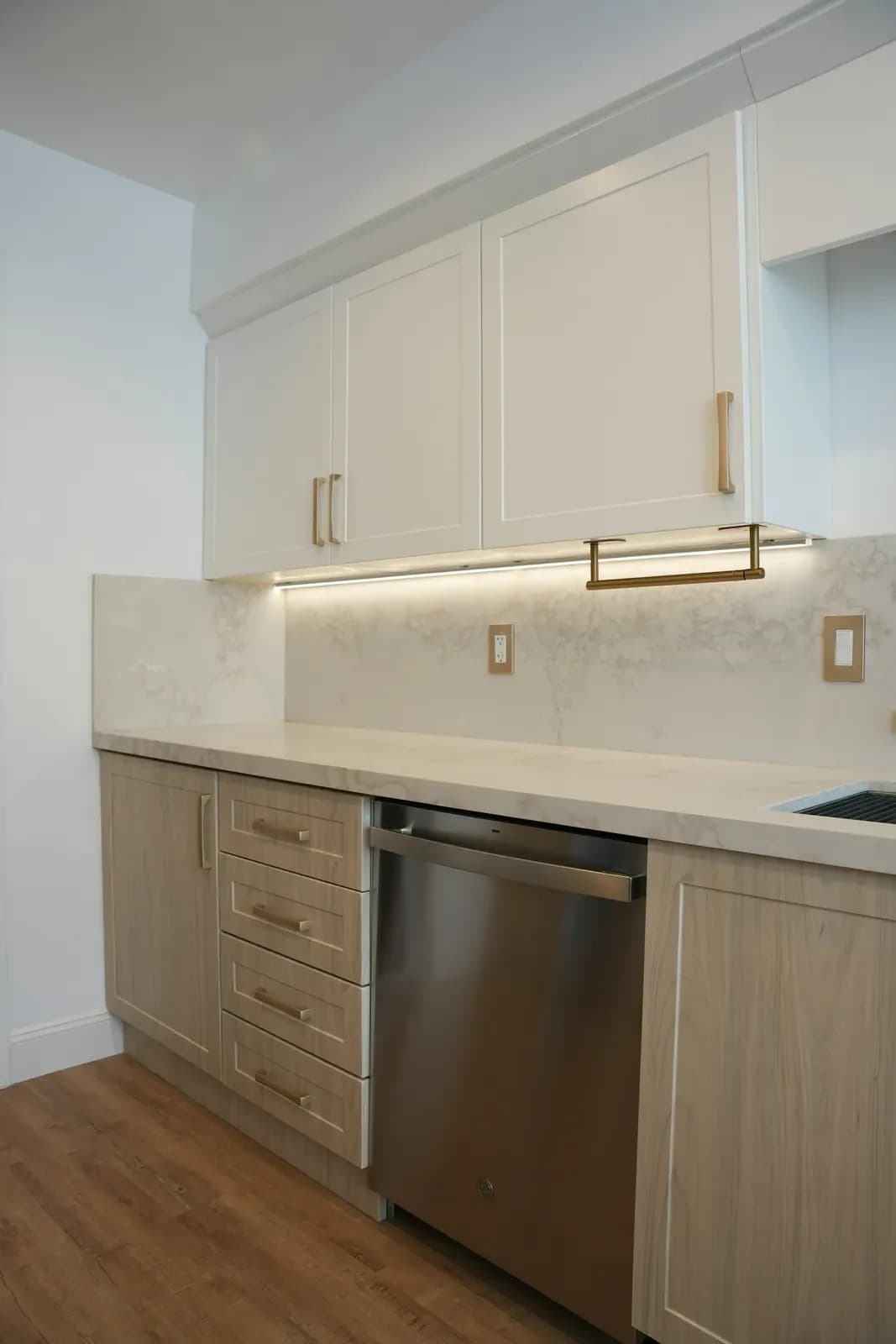
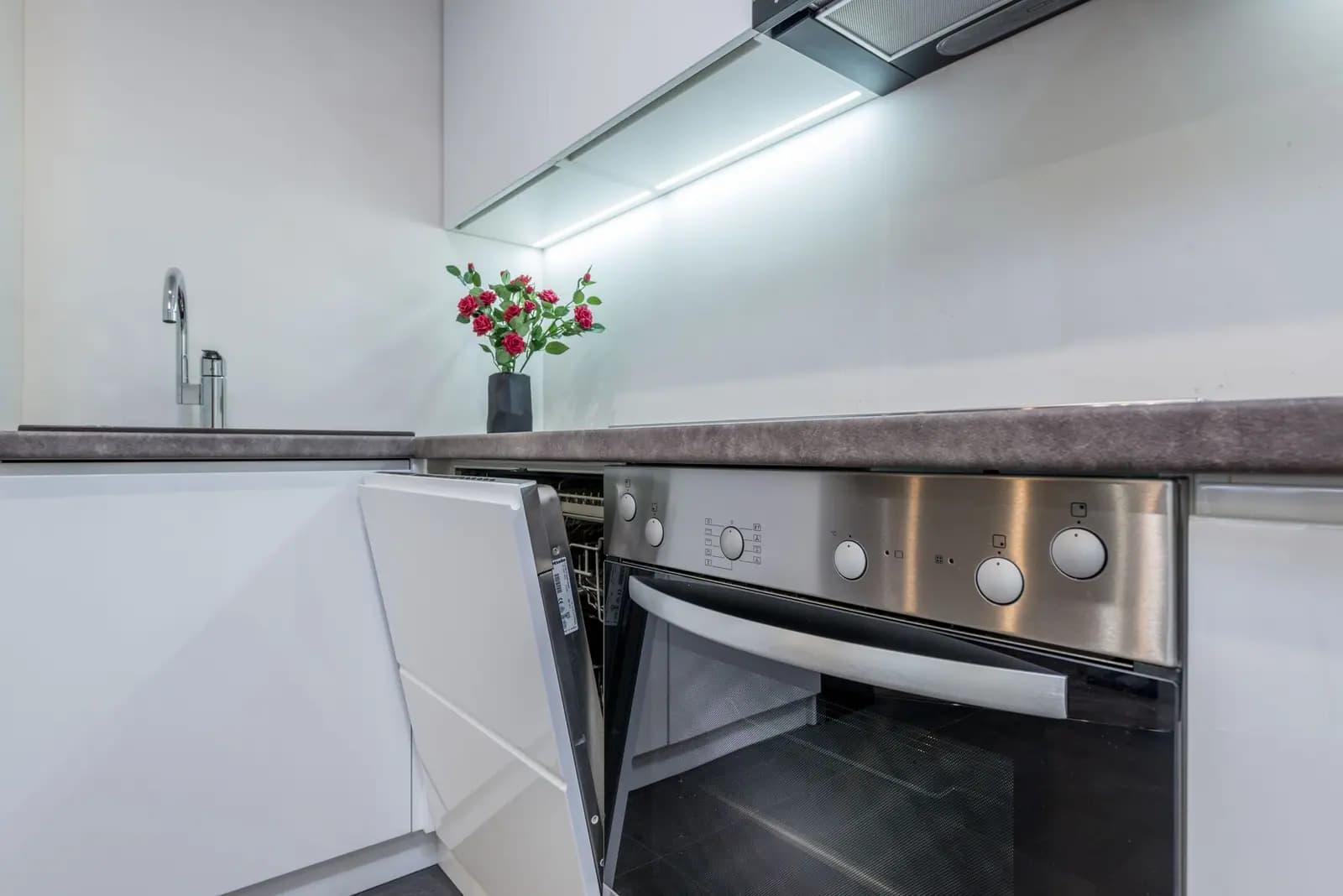
Example photos of the condition — different appliances, not RepairHearth jobs. Photos: Richard Stachmann (Unsplash) · Castorly Stock (Pexels).
Safe checks
- Remove the bottom rack and clean the filter as your manual describes.
- Spin each spray arm by hand and clear blocked holes.
- If the dishwasher drains into a garbage disposal, run the disposal. If the disposal is newly installed, confirm the drain knockout plug was removed.
- Run the kitchen tap until the water is hot before starting a cycle.
- Use dishwasher detergent only — dish soap creates suds that can overflow the tub.
Leave to a technician
Leave this to a professional
- Anything behind the toe kick or under the tub, where wiring and the water connection are
- Pump, valve, heater, or control replacement
- Pulling the dishwasher out of the cabinet
Leaks deserve fast attention
A dishwasher sits inside cabinetry on top of your floor, so a slow leak can do more damage than the repair costs. Swelling at the cabinet base, a musty smell, or soft flooring near the toe kick are reasons to stop using the dishwasher and have it checked, even if you never see a puddle.
What a technician usually checks
- Fill level and inlet valve operation
- Circulation and drain pump function, including blockages in the chopper or sump
- Water temperature during the wash and the heater circuit
- Door latch and switch signals to the control
- Hoses, pump seals, and the door gasket for leaks
What affects dishwasher repair cost
| Factor | Why it matters |
|---|---|
| The part | Filters and drain clogs are the simplest; pumps, inlet valves, and latches are moderate; control boards vary by model. |
| Access | Some repairs require pulling the dishwasher out of its cabinet; panel-ready units take longer. |
| Hidden damage | A long-running leak can damage the subfloor and cabinet — that's outside the appliance repair. |
| Water quality | Hard water scale on valves and heaters can turn a simple job into a parts replacement. |
| Diagnostic fee | Ask whether it's credited toward the repair. |
Is my dishwasher too old to repair?
Dishwashers are often replaced when several things fail together — a pump, a rusting rack, a cracked tub. A single pump or latch failure on an otherwise sound unit is usually a reasonable repair.
Built-in, panel-ready dishwashers lean toward repair because replacement has to match the cabinetry.
Repair or replace?
Pumps, latches, and inlet valves are common repairs. A cracked or rusted-through tub, or several failing parts at once on an older unit, usually tips the decision toward replacement. Built-in panel-ready dishwashers are worth repairing more often because replacing them means matching cabinetry.
Have ready
- Brand, model, and serial (usually on the edge of the door or tub)
- Any error code
- Whether it drains to a disposal or directly to the drain
How a repair request works
- 1Call usTell us the appliance, the brand and what it's doing.
- 2Describe the problemBrand, model, symptoms, and what you've already checked.
- 3Provider reviews itThey contact you to accept and to ask anything they need.
- 4Diagnosis and quoteThe provider confirms any diagnostic fee and the repair price before work starts.
Common questions
Why is there water in the bottom of my dishwasher?
A small amount around the filter is normal on many models. A pool of water after a completed cycle usually means a clogged filter, a blocked disposal connection, a kinked hose, or a drain pump problem.
Why are my dishes still dirty?
Most often a dirty filter, blocked spray arms, loading that blocks the arms, or water that isn't hot enough. If those are fine, the circulation pump or fill level may be the issue.
Why does my dishwasher smell bad?
Usually a dirty filter, food trapped in the sump, or standing water from a slow drain. Clean the filter, run a hot cycle, and check that it drains completely.
Local guides
Where local climate, storms, water, or altitude change the advice: