Common repair requests in Miami
Also available everywhere: all appliance services and urgent safety steps.
Condo and apartment repairs: arrange access first
Rules vary by building, so ask your management office or association before you request service. These are the questions that most often delay a Miami appointment:
- Does the building require a certificate of insurance (COI) naming the association before a technician can enter?
- Does the service elevator need to be booked, and are there move or work hours?
- Who owns the part that failed — the unit (your appliance) or the building (shared dryer exhaust, water shut-offs, drain stacks)?
- Where is the unit's water shut-off valve, and can building staff close it if a washer or ice-maker line is leaking?
Salt air and coastal corrosion
On homes near Biscayne Bay and the beaches, salt-laden air attacks metal that's exposed to the outside: dryer vent hoods, outdoor kitchen appliances, garage refrigerators and the condenser coils of units in open-air utility rooms. Corroded vent hood flaps stick shut and restrict airflow; corroded coils shed heat poorly so the compressor runs longer.
Rinse outdoor vent hoods gently, replace rusted hoods with ones rated for coastal exposure, and keep condenser coils on garage and porch units clean. Corroded wiring or control boards are a technician job.
Hard water even after softening
Miami-Dade Water and Sewer draws from the Biscayne Aquifer, a limestone aquifer, and lime-softens the water at its main treatment plants. Softening reduces hardness but doesn't remove it, so dishwashers still benefit from rinse aid and the hardness setting, and ice makers from on-schedule filter changes.
Hurricane season and refrigerators
The National Hurricane Center's report on Hurricane Irma (2017) documents widespread power outages across Florida. In high-rises, an outage can also stop elevators and water pumps — another reason to pre-cool the refrigerator and freezer before a storm, keep an appliance thermometer inside each, and know how to close the unit's water valves.
Provider coverage in Miami
Participating providers in Miami-Dade County are still being verified, including which ones meet common condo insurance requirements. Call with your ZIP code first.
Miami at a glance
- Housing pattern
- Many condos and high-rise apartments alongside single-family homes
- Before the visit
- Building approval, certificate of insurance, elevator booking
- Tap water
- Biscayne Aquifer, lime-softened by Miami-Dade Water and Sewer — still mineral-rich
- Local guide
- Dryer repair in Miami (condo exhaust)
Provider coverage in Miami
Participating providers: not yet. This page is local guidance — not a promise that a technician is available at every address.Common questions
Why does my condo building ask for a technician's insurance certificate?
Many associations require proof of liability insurance before contractors work in units. Ask management for the exact wording they need and share it when you request service so the visit isn't turned away at the desk.
Can salt air damage indoor appliances?
Mostly it affects metal exposed to outside air — vent hoods, outdoor and garage units, open-air utility rooms. Indoor appliances in air-conditioned rooms are far less exposed.
Who fixes the dryer exhaust in a high-rise?
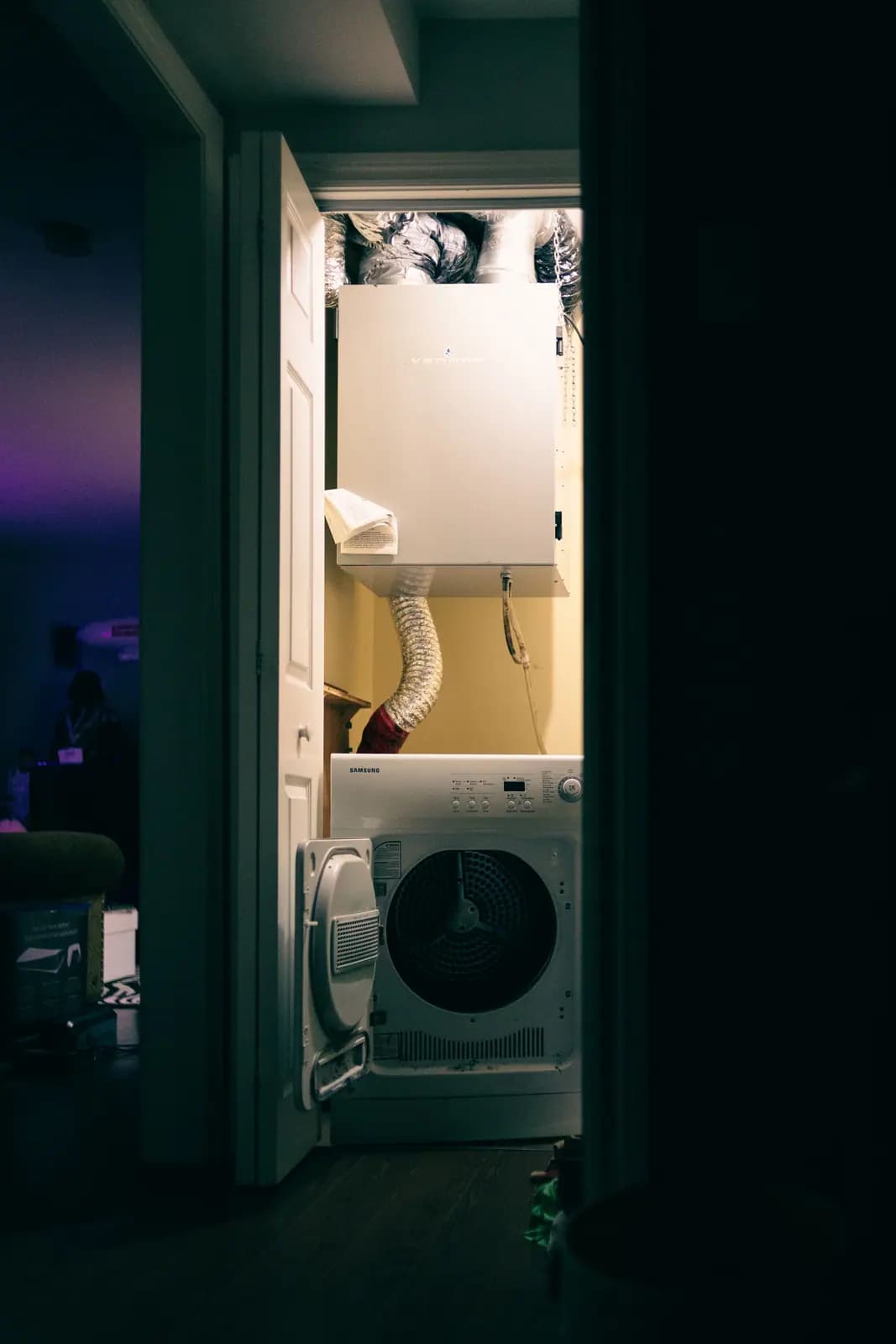
The duct inside your unit is usually yours; the shared riser and any roof booster fan usually belong to the building. Our Miami dryer guide explains how to tell which part is restricting airflow.
More in Florida: Florida appliance repair help