
Short answer
Check five things first: the shut-off arm or switch, a freezer warmer than about 0 °F, an overdue water filter, a closed or kinked supply line, and ice jammed in the bin or ejector. If all five are fine, the inlet valve, a frozen fill tube, or the ice maker module itself is the likely cause.
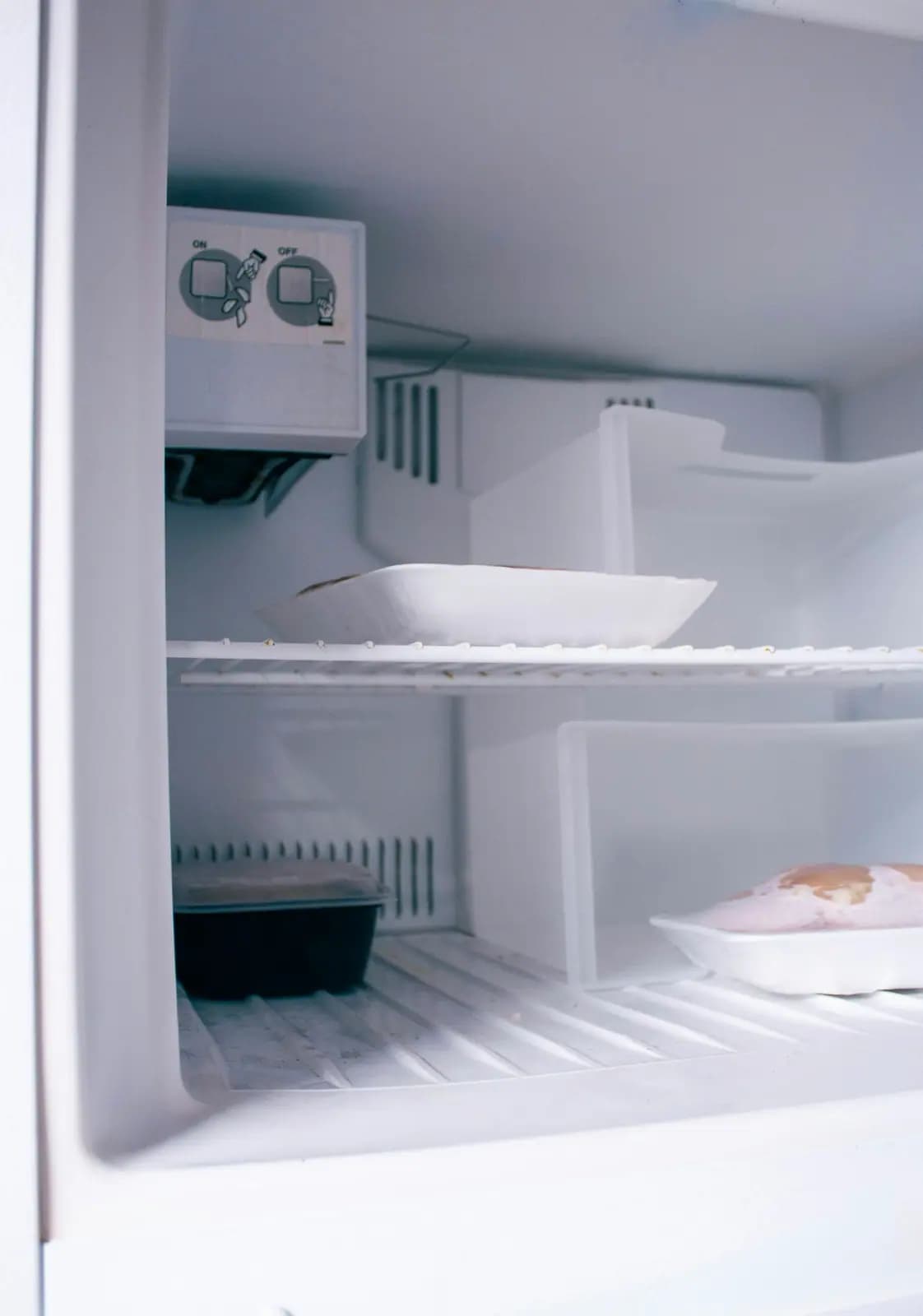
The five checks
- Shut-off arm down / switch on
- Freezer at about 0 °F
- Filter replaced on schedule
- Supply valve open, line not kinked
- No ice clump jamming the bin or ejector
Ice maker water supply
- 1Supply valveFully open, line not kinkedYou can check
- 2Water filterReplace on scheduleYou can check
- 3Inlet valveElectrically opens to fillTechnician
- 4Fill tubeCan freeze if the freezer runs warm
- 5Ice moldFreezes and ejects cubes
Possible causes, in the order they're usually ruled out
- Switch / shut-off armIce maker turned offYou can check
- Freezer temperatureWarmer than about 0 °FYou can check
- Water filterClogged or overdueYou can check
- Supply lineValve closed or line kinkedYou can check
- Inlet valve / fill tubeValve failed or tube frozenTechnician
- Ice maker moduleDoesn't cycle or ejectTechnician
What the result tells you
| You see | Possible cause |
|---|---|
| No water reaches the mold | Inlet valve, frozen fill tube, supply issue |
| Water in the mold, never ejects | Freezer too warm or ice maker module |
| Small or hollow cubes | Low water flow: filter, pressure, valve |
| Ice in the freezer floor | Overfilling or a leaking fill tube |
Don't attempt
Leave this to a professional
- Using a heat gun or sharp tools on a frozen fill tube
- Inlet valve replacement
Stop and close the water valve if
Safety
- Water is pooling under the refrigerator
- Ice is forming on the freezer floor or behind the ice bucket
- The supply line is cracked or dripping
How it's diagnosed
A technician usually runs a test cycle to see whether the ice maker rotates and calls for water, then checks whether the inlet valve opens and how much water reaches the mold. A frozen fill tube is thawed and the cause — often a freezer running too cold or a slow-dripping valve — is addressed so it doesn't refreeze.
Cost and repair-or-replace
Inlet valves and ice maker modules are both replaceable parts; neither is normally a reason to replace the refrigerator. If the refrigerator is old and the ice maker is the only fault, some owners simply turn the ice maker off and use trays.
What to request
A symptom points to likely causes; only testing confirms one. If the checks above don't solve it, request a diagnosis for ice maker repair and mention what you've already checked.
Common questions
How long does a new ice maker take to make ice?
Often a day or more after installation or reset. Check your manual for the expected time.
How do I reset my refrigerator's ice maker?
It depends on the model: many have an on/off switch or a reset or test button on the ice maker, and some reset from the control panel. Turn it off for a minute and back on, or follow the test procedure in your manual. Don't force repeated test cycles — they can overfill the mold.
Why does the water dispenser work but the ice maker doesn't?
They usually share a supply but use separate valves and lines, so working water rules out the household supply only. The ice side can still have a failed valve coil, a frozen fill tube, a freezer that's too warm, or a faulty ice maker module.
Can a frozen water line stop the ice maker?
Yes. If the fill tube into the ice maker freezes, no water reaches the mold. It often happens when the inlet valve drips between fills or the freezer runs very cold. A technician can thaw it and find why it froze so it doesn't recur.
Why is my ice maker making ice slowly?
Low water pressure, a clogged filter, a freezer that's running warm or a door opened often will all slow production. Every ice maker also has a limited daily output, so heavy use can empty the bin faster than it refills.
Why did my ice maker stop working after I changed the filter?
Air trapped in the line, a filter that isn't fully seated, or a non-matching filter can restrict flow. Reseat the filter, then run a few gallons through the water dispenser to purge air before expecting ice.
Why does my ice maker click but not make ice?
The motor is trying to cycle. If no water arrives, the valve or supply is the problem; if ice is jammed in the mold or ejector, the arm can't complete its cycle. Clear any jammed ice with the ice maker off and see if the next cycle fills.
How much water pressure does an ice maker need?
Enough to open the inlet valve fully — the minimum is listed in the installation manual. Reverse-osmosis systems and long or kinked supply lines often reduce pressure below it, which leads to small cubes or none at all.
Is it worth replacing the ice maker module?
If the refrigerator is otherwise sound, usually yes — the module is a self-contained part. If the refrigerator itself isn't holding temperature, fix that first, because an ice maker can't work in a warm freezer.
Why is my ice maker not dropping ice into the bin?
Ice may be frozen to the mold, the ejector or harvest motor may have stalled, or the bin may be full or misaligned so the sensor or arm thinks it's full. Check the bin is seated and the arm moves freely; a stalled motor needs service.
Need ice maker repair? Call now
Pricing, timing, and appointments are confirmed by the repair provider.
Talk to someone now about your appliance. Available 24/7.
RepairHearth is a free referral service. By calling, you agree to be connected with an independent, participating repair provider who may call or text you back about your request at the number you call from. Calls may be recorded for quality and routing. Consent is not a condition of any purchase; you can opt out at any time, and message and data rates may apply. Privacy policy.