Short answer
Food usually freezes in the fresh-food section because the temperature is set too cold or items sit directly in front of the cold-air vent. If correcting both doesn't help, an air damper stuck open or a faulty temperature sensor may be letting too much cold air in.
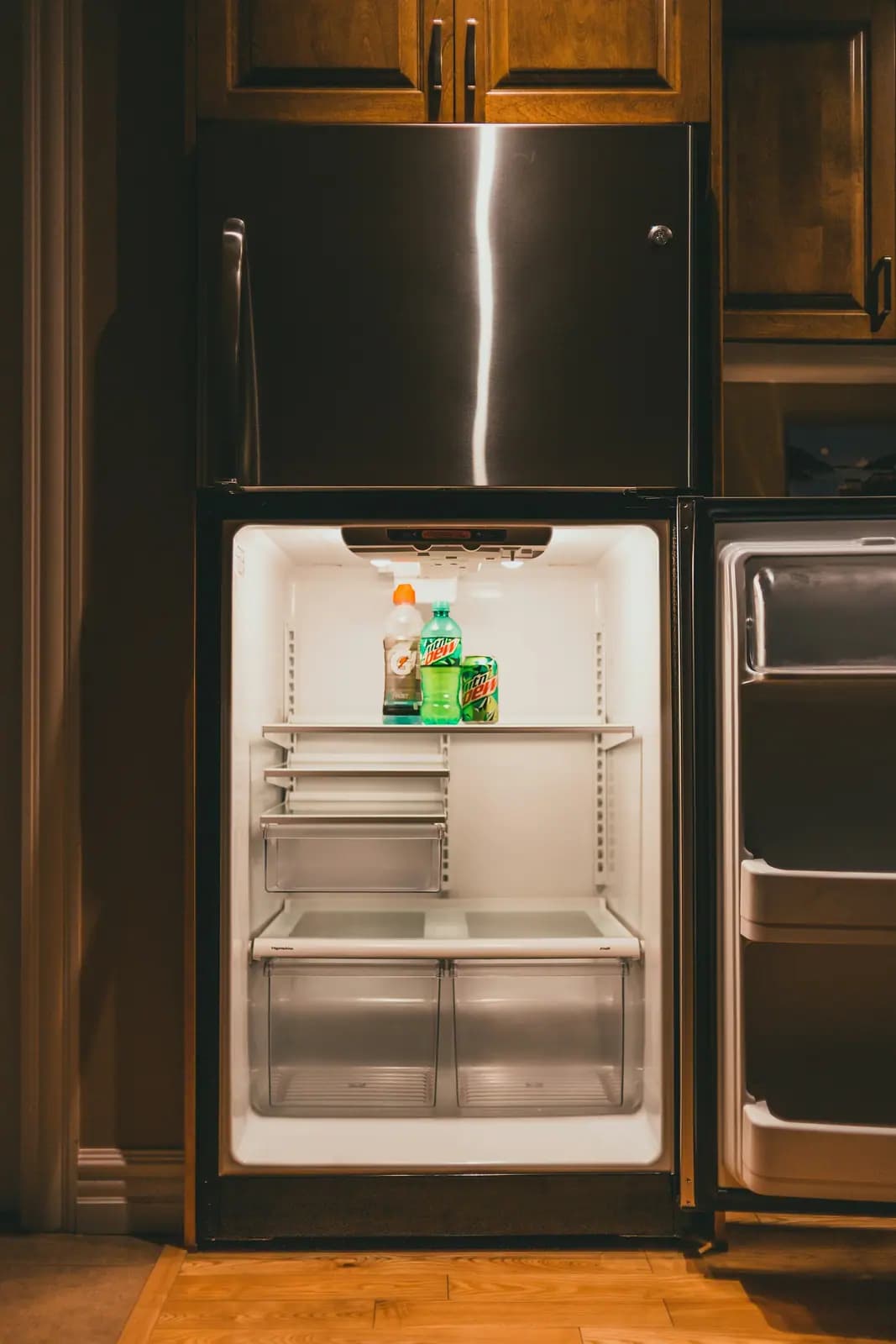
Fix it in this order
- Set the fresh-food section to about 37 °F (or the middle setting) and the freezer to 0 °F.
- Move items away from the vents — commonly along the back wall or near the top.
- Don't overfill; packed shelves block circulation and create cold spots.
- Wait 24 hours and recheck with a thermometer.
If it keeps freezing
These require diagnosis; parts are usually inexpensive relative to the refrigerator.
| Possible cause | What it does |
|---|---|
| Air damper stuck open | Lets too much freezer air into the fresh-food section |
| Temperature sensor (thermistor) fault | Control misreads the temperature and keeps cooling |
| Control board fault | Doesn't regulate the damper or compressor correctly |
Foods most likely to freeze
High-water foods freeze first: lettuce, celery, cucumbers, berries, eggs, and milk. Keep them in crisper drawers or on the door, away from the vent, and keep denser items like condiments and leftovers near the back.
Cold spots are normal; frozen shelves aren't
Most refrigerators have a slightly colder zone near where freezer air enters, often the top back. Delicate produce placed there can freeze even when the overall temperature is correct. If only items in that spot freeze, it's placement. If food freezes on every shelf, the section is running too cold overall.
How it's diagnosed and what it costs
A technician compares actual temperatures with the setting, checks whether the air damper opens and closes as the control commands, and measures the temperature sensor's reading. Damper and sensor parts are typically modest; a control board costs more and depends on availability for your model. This is rarely a reason to replace a refrigerator.
What to request
A symptom points to likely causes; only testing confirms one. If the checks above don't solve it, request a diagnosis for refrigerator repair and mention what you've already checked.
Common questions
What temperature should my refrigerator be?
At or below 40 °F per FDA guidance; around 37 °F keeps food cold without freezing it.
Need refrigerator repair? Call now
Pricing, timing, and appointments are confirmed by the repair provider.
Our phone line is being set up. Please check back soon.