
Short answer
Most dishwashers that leave dishes wet are short on rinse aid, running an energy-saving cycle without heated dry, or being unloaded too soon. Plastics never dry as well as glass or ceramic because they don't hold heat. If dishes are still soaked after rinse aid and a heated-dry setting, the heating element, drying fan or vent may have failed.
Check these first
- Fill the rinse-aid dispenser — it helps water sheet off instead of beading.
- Turn on heated dry or an extra-dry option if your model has one.
- Leave the door closed for 15–30 minutes after the cycle ends; many dishwashers dry by condensation and need the time.
- Unload the bottom rack first so water on the top rack doesn't drip onto dry dishes.
- Run the kitchen tap hot before starting so the final rinse starts warmer.
How dishwashers dry
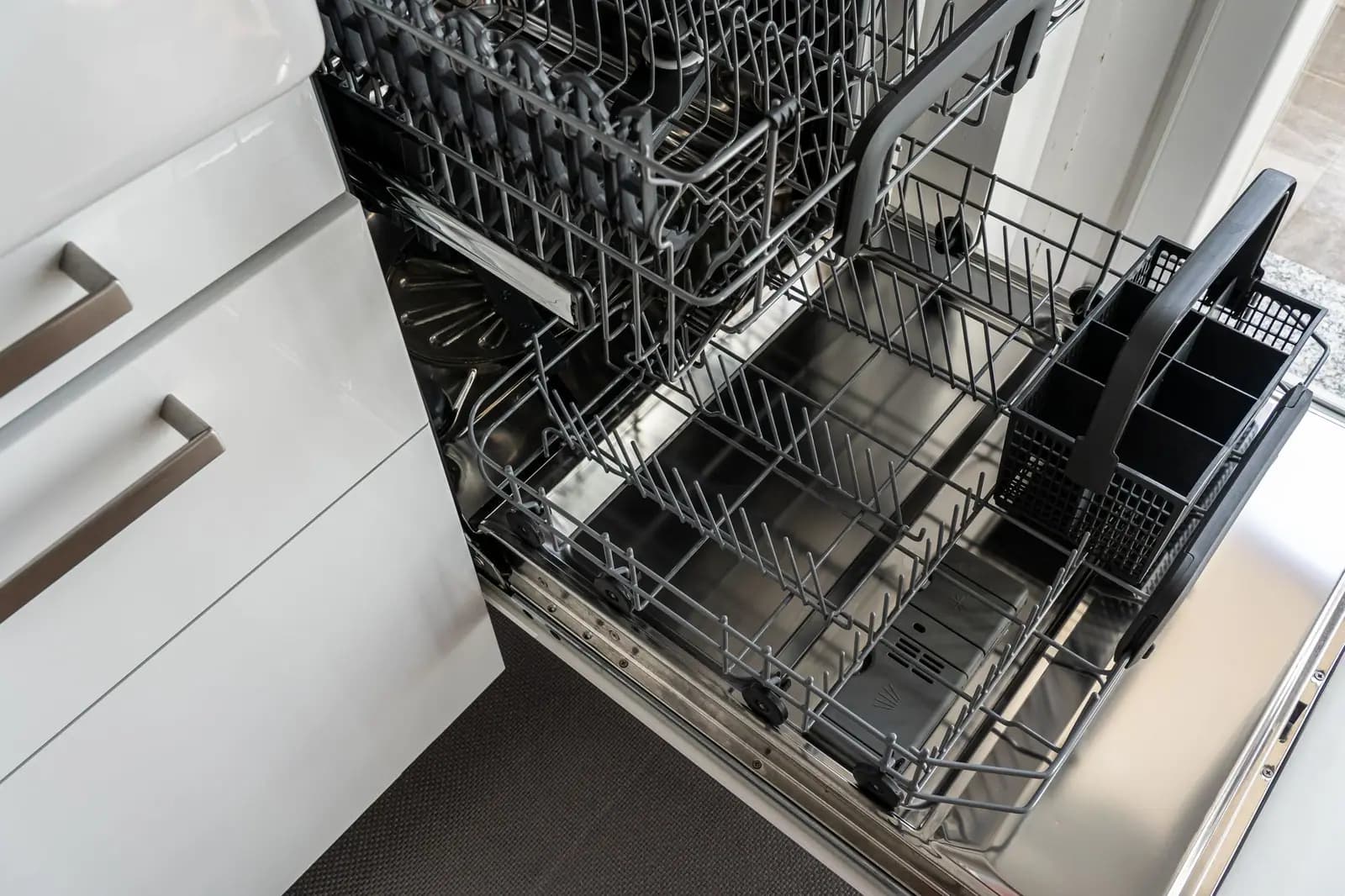
Many modern dishwashers use condensation drying: a very hot final rinse heats the dishes, and moisture condenses on the cooler stainless tub walls. Others use a heating element, a fan, or a vent that opens at the end of the cycle. Knowing which yours uses tells you what can fail — a condensation model with wet dishes is usually a rinse-aid or rinse-temperature problem, while a heated-dry model that stays cold points to the element or its control.
Why plastics stay wet
Plastic holds far less heat than glass or ceramic, so water on plastic containers doesn't evaporate during condensation drying. Some water on plastics is normal on every dishwasher; it isn't a fault.
Symptom pattern
| What you see | Likely cause |
|---|---|
| Everything wet, tub cold at the end | Heating element, high-limit thermostat or control |
| Glass dry, plastic wet | Normal for condensation drying |
| Spots and droplets everywhere | Empty rinse-aid dispenser or hard water |
| Wet only on one side | Blocked vent or drying fan fault (models that use them) |
Leave to a technician
- Testing or replacing the heating element
- Drying fan and vent assemblies
- Control board and thermistor faults
What to request
A symptom points to likely causes; only testing confirms one. If the checks above don't solve it, request a diagnosis for dishwasher repair and mention what you've already checked.
Common questions
Why are my dishes still wet at the end of the dishwasher cycle?
Most often there's no rinse aid, heated dry is off, or the dishes were unloaded straight away. Many dishwashers dry by condensation and need 15–30 minutes with the door closed.
Does rinse aid really help dishes dry?
Yes. It lowers water's surface tension so water sheets off dishes instead of sitting in droplets, which speeds drying and reduces spots.
Why do plastic containers never dry in the dishwasher?
Plastic doesn't hold heat the way glass and ceramic do, so moisture doesn't evaporate from it. Some water on plastics is normal.
How do I know if my dishwasher heating element is bad?
If heated dry is on and the tub is cool at the end of the cycle — and dishes are also cleaning poorly — the element or its control may have failed. A technician tests it for continuity.
Should I open the dishwasher door after the cycle to help drying?
On many condensation-drying models, wait 15–30 minutes first; opening right away lets steam escape before it condenses. Some models open the door automatically at the end.
Is a dishwasher that doesn't dry worth repairing?
A heating element or fan is a moderate repair on a dishwasher that otherwise works well. If it also leaks or doesn't clean, weigh it against replacement — see the dishwasher repair-or-replace guide.
Why are the dishes on the top rack wetter than the bottom?
Cup bottoms and concave items collect water on the top rack. Angle them more steeply and unload the bottom rack first.
Can hard water stop dishes from drying properly?
Hard water leaves spots and film that hold water. Rinse aid and the dishwasher's hardness setting help.
Do energy-saving cycles dry worse?
Often, yes — they may skip the heated dry or use a cooler final rinse. Choose a heated-dry or extra-dry option when you need dry dishes.
Why is there water pooled in the bottom of my dishwasher after drying?
That's a drain question rather than drying — see dishwasher not draining.
Need dishwasher repair? Call now
Pricing, timing, and appointments are confirmed by the repair provider.
Talk to someone now about your appliance. Available 24/7.
RepairHearth is a free referral service. By calling, you agree to be connected with an independent, participating repair provider who may call or text you back about your request at the number you call from. Calls may be recorded for quality and routing. Consent is not a condition of any purchase; you can opt out at any time, and message and data rates may apply. Privacy policy.